
TL;DR:
- Fashion merchandising involves strategic planning, organization, and promotion to maximize sales and profit.
- It differs significantly between fast fashion focusing on speed and luxury emphasizing exclusivity and storytelling.
- Combining data analytics with creativity is essential for successful and sustainable merchandising careers.
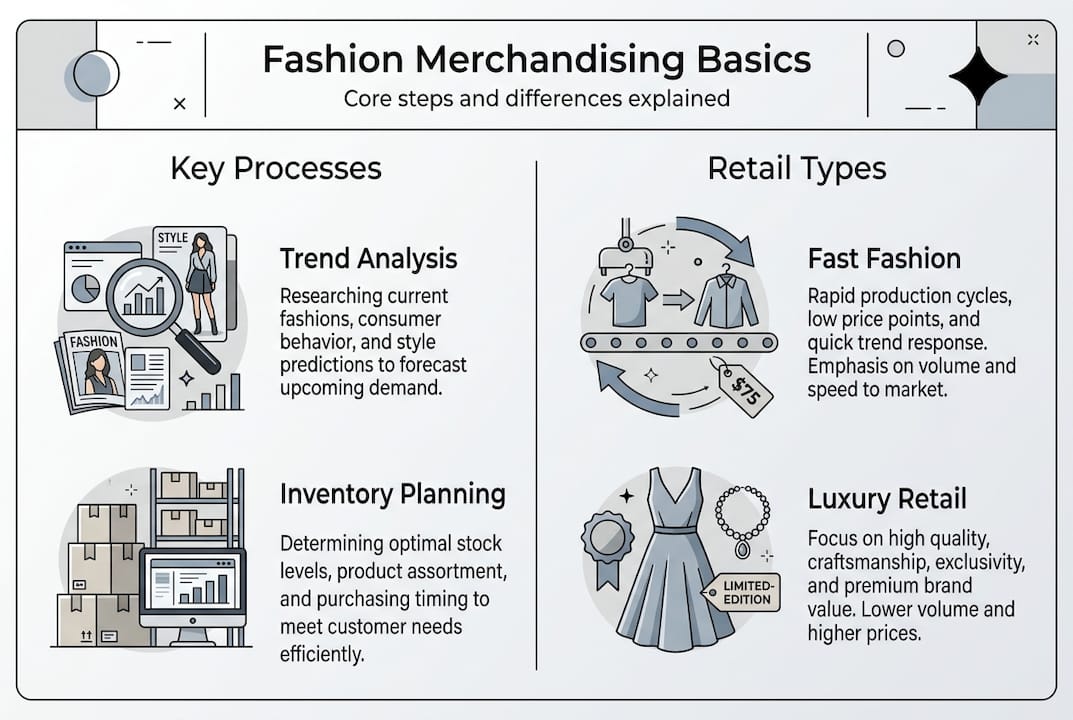
Fashion merchandising is widely misunderstood as a job about folding sweaters and arranging mannequins. In reality, it’s the backbone of a global industry worth trillions. Fashion merchandising is the strategic process of planning, organizing, and promoting fashion products to maximize sales and profitability by ensuring the right products are available at the right time, place, price, and quantity. Whether you’re eyeing a role at a luxury house or a fast-moving retailer, understanding this discipline is your first real step. This guide covers the fundamentals, key processes, luxury retail strategy, career pathways, and the metrics that actually matter.
Table of Contents
- What is fashion merchandising? The fundamentals explained
- Core processes in modern fashion merchandising
- Merchandising strategies: Fast fashion vs. luxury retail
- Key metrics and career pathways in fashion merchandising
- Why true fashion merchandising is an art and a data science
- Discover exclusive fashion with MaraFormigone
- Frequently asked questions
Key Takeaways
| Point | Details |
|---|---|
| Strategic definition | Fashion merchandising is a blend of analytics, trend forecasting, and visual storytelling that drives profitability. |
| Fast vs. luxury | Luxury focuses on exclusivity and storytelling, while fast fashion prioritizes speed and inventory agility. |
| Career pathways | Building both creative and business skills is crucial for entering and succeeding in the field. |
| Measurable impact | Effective merchandising can deliver double-digit profit growth and substantial inventory savings. |
What is fashion merchandising? The fundamentals explained
Fashion merchandising is not a single job. It’s a discipline that spans business strategy, creative direction, and supply chain management all at once. At its core, fashion merchandising is the strategic process of planning, organizing, and promoting fashion products to drive profit. But that definition only scratches the surface.
Think of it this way: before a single dress hits the floor of a Gucci boutique or lands on an e-commerce product page, dozens of decisions have already been made. Which colors will sell? How many units? At what price point? In which markets? Those decisions are fashion merchandising.
The major functions of fashion merchandising include:
- Trend forecasting: Identifying what consumers will want six to eighteen months from now
- Assortment planning: Deciding which products, in which sizes and colors, go into a store or catalog
- Pricing strategy: Setting prices that reflect brand positioning and drive margin
- Promotion planning: Coordinating campaigns, editorial placements, and markdowns
- Inventory management: Ensuring stock levels match demand without over-buying or under-buying
One of the biggest misconceptions students carry into the field is that merchandising is purely visual. Visual presentation matters, yes, but it’s the last mile of a much longer process. Understanding fashion editorial in luxury helps you see how storytelling and product strategy connect, but the merchandiser’s job starts long before the editorial shoot.
“Fashion merchandising bridges the gap between a designer’s creative vision and the commercial realities of the market. Without it, even the most beautiful collection can fail.”
Merchandisers also play a critical role in the fashion supply chain. They sit between the design team and the retail floor, translating creative output into commercial decisions. If you want to become a fashion merchandiser, you need both analytical skills and a genuine instinct for what resonates with consumers.
Core processes in modern fashion merchandising
Now that we’ve covered the fundamentals, let’s look at the technical processes and innovations powering today’s fashion merchandising. The field has changed dramatically in the last decade, and technology is a big reason why.
Key mechanics include trend forecasting, inventory management, buying and planning, visual merchandising, assortment planning, pricing strategies, and sales forecasting using data analytics. Here’s how these processes connect in practice:
- Sales forecasting: Analyzing historical data, market trends, and consumer behavior to predict future demand
- Assortment planning: Building a product mix that covers the right categories, price tiers, and style directions
- Buying: Selecting and purchasing inventory from designers or manufacturers based on the plan
- Pricing: Aligning price points with brand positioning, competitor benchmarks, and margin targets
- Visual merchandising: Translating the product strategy into physical or digital displays that drive conversion
Data analytics and artificial intelligence have reshaped how merchandisers work. AI tools now process millions of data points from social media, search trends, and point-of-sale systems to predict what will sell before a season even launches. The role of fashion buyers has also evolved, with buyers relying more heavily on predictive software to reduce risk.
One of the most costly problems in retail is overstock and stockouts. Overstock ties up cash and forces markdowns that erode margin. Stockouts lose sales and frustrate customers. PLM software in merchandising helps teams manage product lifecycles, reduce errors, and coordinate planning across global teams.
Pro Tip: Even if you’re early in your career, get comfortable with spreadsheets and basic inventory analytics. Knowing how to read a sell-through report or build a simple open-to-buy plan will set you apart from candidates who only bring creative skills.
Merchandising strategies: Fast fashion vs. luxury retail
With modern practices in mind, it’s crucial to see how merchandising differs sharply between mass-market and luxury brands. The contrast is not just about price. It’s about an entirely different philosophy.
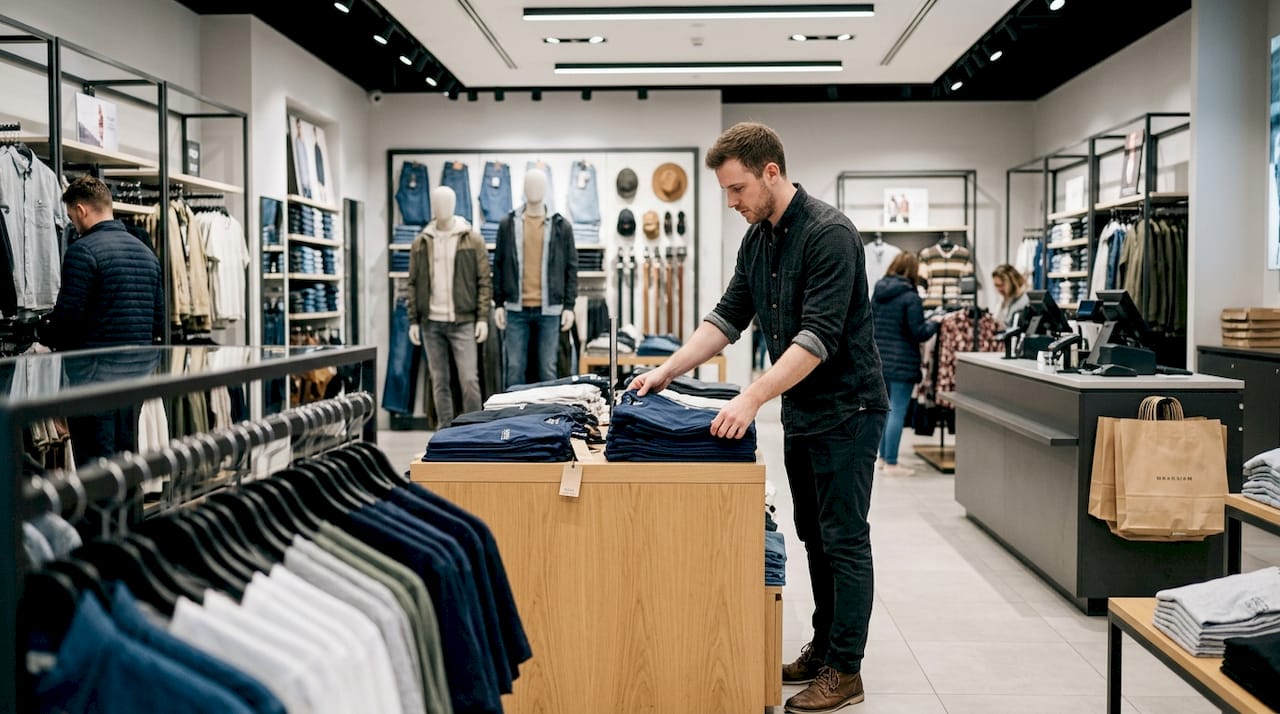
Fast fashion brands like Zara emphasize speed and inventory agility, while luxury brands prioritize scarcity and brand narrative over volume. Zara can move a trend from runway to store floor in as little as two weeks. Hermès, by contrast, deliberately limits supply of its Birkin bags to protect desirability.
| Factor | Fast fashion (e.g., Zara) | Luxury (e.g., Hermès, Gucci) |
|---|---|---|
| Speed to market | 2 to 6 weeks | 6 to 18 months |
| Inventory approach | High volume, rapid turnover | Controlled scarcity |
| Pricing strategy | Accessible, competitive | Premium, aspirational |
| Brand storytelling | Trend-driven | Heritage and exclusivity |
| Visual merchandising | High density, frequent change | Minimalist, curated |
| Markdown strategy | Frequent promotions | Rare, brand-protective |
Luxury merchandising priorities look very different from fast fashion. They include:
- Exclusivity: Limiting availability to protect brand equity
- Storytelling: Every product placement reinforces a brand narrative
- High-touch experience: The in-store environment is as important as the product
- Minimalism: Less product on display communicates luxury and intentionality
Understanding luxury fashion essentials gives you a foundation for why these choices are made. Luxury brands also operate on a different seasonal calendar. Learning how fashion seasons in luxury work helps you understand the rhythm of buying and planning in high-end retail.
Luxury visual merchandising is its own specialty, using light, space, and material to communicate brand values without a single word. And as trends in luxury style continue to shift, merchandisers must balance tradition with cultural relevance.
Key metrics and career pathways in fashion merchandising
Now that you understand strategic differences, let’s look at real-world metrics and how you can enter this field. Numbers matter here, and they’re more impressive than most students expect.
The global apparel market reached $1.84 trillion in 2025, with the luxury segment exceeding $470 billion. Case studies show that effective merchandising strategies can drive 23 to 85% revenue growth, reduce inventory costs by 25 to 40%, and deliver profit margins between 8 and 12.8%. Those are not small gains.
| Metric | Benchmark |
|---|---|
| Global apparel market (2025) | $1.84 trillion |
| Luxury fashion segment | $470+ billion |
| Revenue growth from merchandising | 23 to 85% |
| Inventory cost reduction | 25 to 40% |
| Typical profit margins | 8 to 12.8% |
For students building toward a career, the pathway typically looks like this:
- Entry level: Merchandise coordinator, retail analyst, or assistant buyer
- Mid level: Merchandiser, planner, or category manager
- Senior level: Senior merchandiser, merchandise manager, or head of buying
- Director level: VP of merchandising or chief merchandising officer
To get there, focus on building both business and fashion acumen. Study the contemporary fashion market to understand where consumer demand is heading. Pursue internships at retailers or brands, even small ones. Learn to use industry tools like Excel, ERP systems, and planning software. And read the fashion merchandising career guide to understand what hiring managers actually look for.
Pro Tip: The candidates who get hired fastest are those who can speak both languages fluently: the language of creativity and the language of data. Practice presenting a trend forecast alongside a financial justification for it.
Why true fashion merchandising is an art and a data science
Here’s something most fashion programs don’t teach clearly enough: data and creativity are not rivals in merchandising. They’re partners. But the balance between them is harder to find than any textbook suggests.
The real tension in the field is not between art and commerce. It’s between short-term numbers and long-term brand equity. A merchandiser who only chases margin will discount too aggressively and erode the brand. One who only follows creative instinct will overbuy and sit on unsold inventory. Neither approach works alone.
What industry insiders understand, and what students often learn the hard way, is that merchandising bridges creative and commercial realities in ways that require constant judgment calls. When a new creative director takes over a house, for example, the merchandising team must prioritize vision over pure commerce in the short term to give the new direction room to breathe. That’s a nuanced call that no algorithm can make.
The brands that get it right, the ones that build lasting value, are those where branding’s influence in luxury is treated as a strategic asset, not just a marketing concern. Merchandisers who understand brand equity alongside sell-through rates are the ones who rise to director level.
Pro Tip: Get hands-on with both analytics software and a creative project at the same time. Build a mock assortment plan, then present it with a visual mood board. That combination is what real merchandising looks like.
Discover exclusive fashion with MaraFormigone
Seeing luxury merchandising in action is one of the best ways to internalize what you’ve been studying. MaraFormigone curates designer collections from Gucci, Prada, Balenciaga, and Alexander McQueen with the same strategic intentionality you’ve read about here: controlled selection, clear brand positioning, and a high-end experience at every touchpoint.
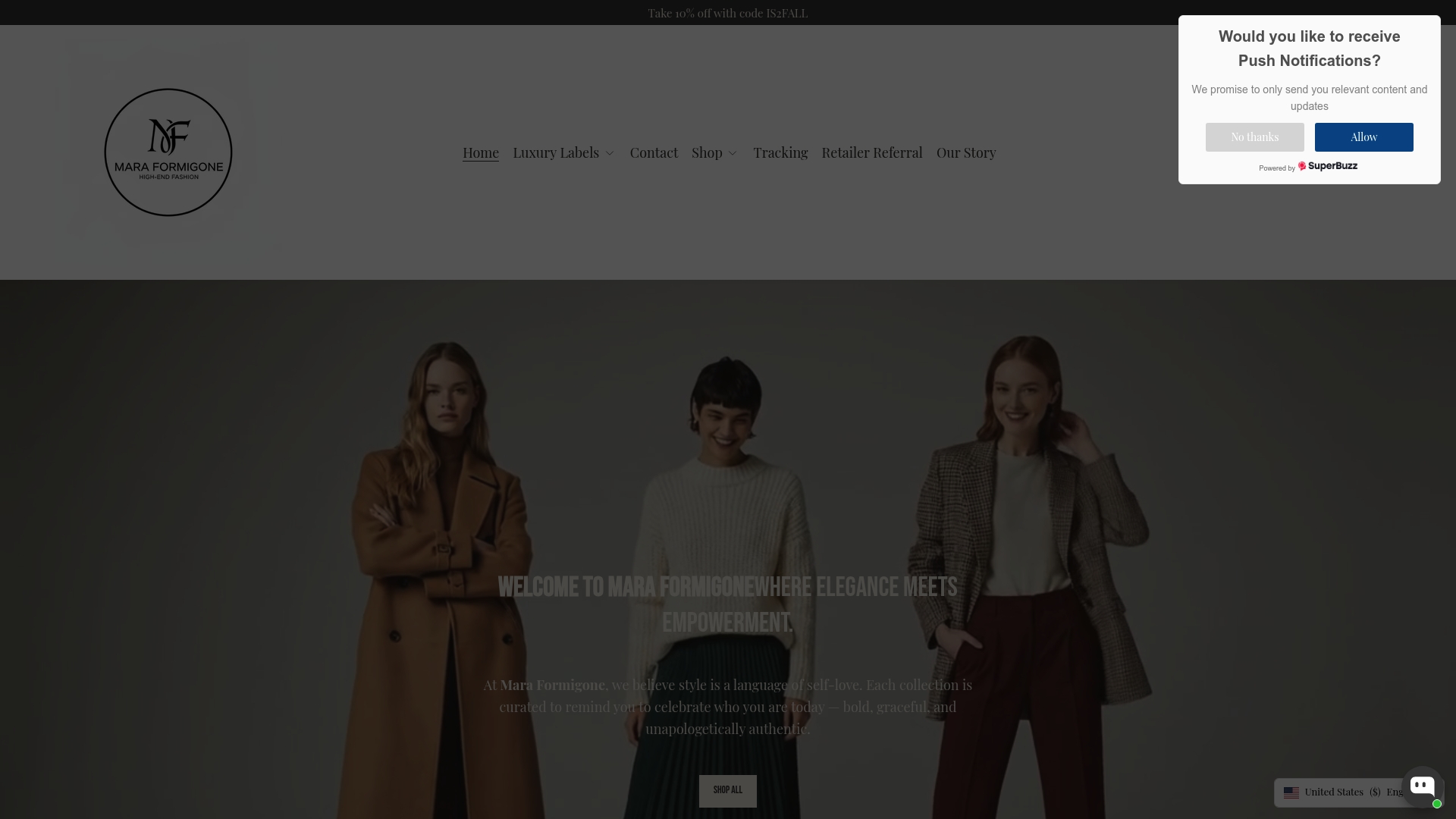
Explore how product curation and assortment strategy come to life by browsing pieces like the Harmont&Blaine Polo or the Lee Sweatshirts, both examples of how brand identity shapes product selection. Use the site as a live case study for everything you’ve learned about luxury retail strategy.
Frequently asked questions
What skills are most important for a career in fashion merchandising?
Students should focus on blending business acumen with fashion knowledge. Key skills include trend analysis, data analytics, assortment planning, visual communication, and financial planning.
How is luxury fashion merchandising different from fast fashion?
Luxury prioritizes scarcity and brand narrative over volume, while fast fashion focuses on speed, high inventory turnover, and broad market appeal. The metrics, timelines, and decision-making frameworks are fundamentally different.
What technologies are used in fashion merchandising today?
Modern merchandising teams use PLM, ERP, and AI tools to forecast sales, plan assortments, and manage inventory across global markets. These platforms reduce errors and speed up decision-making significantly.
How much does fashion merchandising impact profitability?
Case studies show 23 to 85% revenue growth and inventory cost reductions of 25 to 40% when strategic merchandising is applied effectively. Profit margins in well-merchandised operations typically land between 8 and 12.8%.
Recommended
- Master the role of fashion buyers in luxury retail 2026
- What Is the Role of Fashion Editors? 80% Luxury Growth – MaraFormigone
- What is fashion sustainability: luxury guide 2026 – MaraFormigone
- What is fashion editorial and why it matters in luxury style
- Custom Jewelry Design Process: Creating Ethical Luxury – Eternal Carat

