
Article: What is fashion editorial and why it matters in luxury style
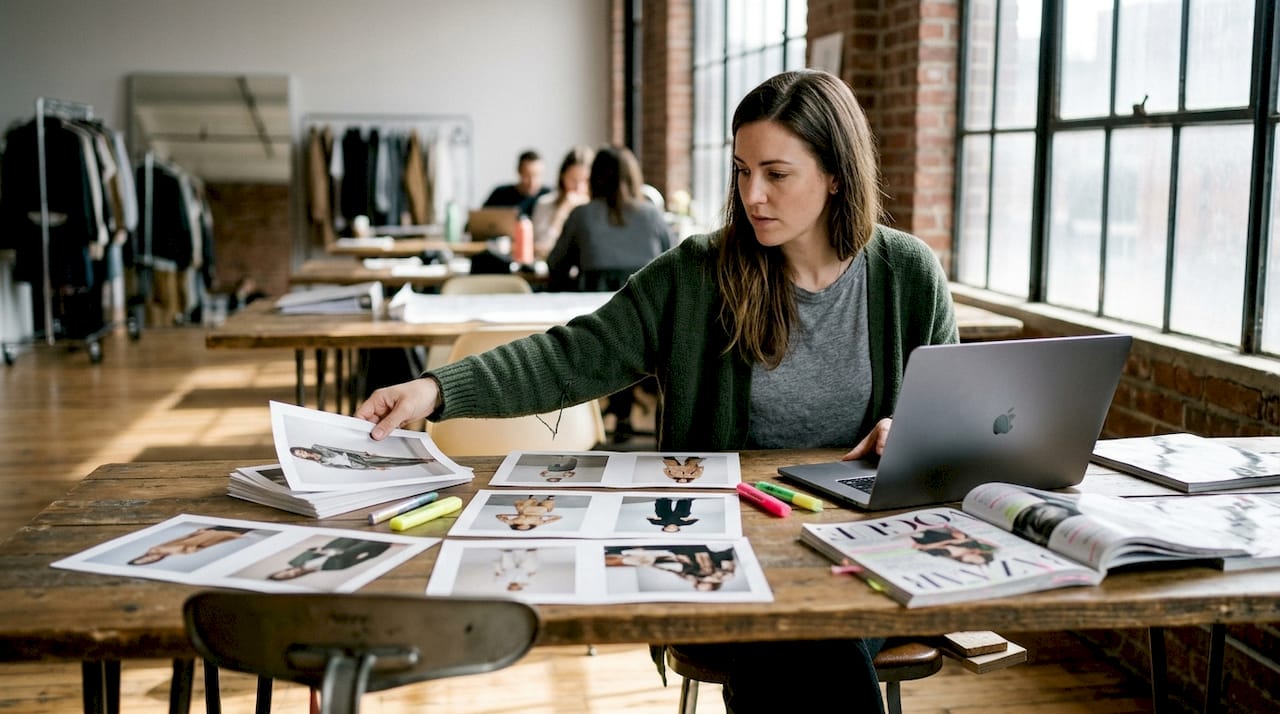
What is fashion editorial and why it matters in luxury style
Many people mistakenly believe fashion editorials are simply advertisements for clothing. In reality, editorials represent something far more influential: they are artistic narratives that shape trends, inspire cultural movements, and define the visual language of luxury fashion. Unlike commercial content designed to sell specific products, editorial fashion style prioritizes creativity and storytelling. This article will clarify what fashion editorials truly are, explain their production process, distinguish them from commercial work, and reveal why they remain essential to the luxury fashion ecosystem.
Table of Contents
- Key takeaways
- Understanding the essence of fashion editorials
- The fashion editorial production process explained
- Distinguishing editorial from commercial fashion work
- The impact and evolving role of fashion editorials in luxury fashion
- Explore more about fashion editorial roles and luxury trends
- Frequently asked questions
Key Takeaways
| Point | Details |
|---|---|
| Editorials are art narratives | They use storytelling and styling to shape fashion and culture rather than push a product. |
| Collaborative production process | Creating an editorial relies on planning, team assembly, and coordinated execution across stylists, photographers, makeup artists, and models. |
| Publisher validation matters | Publishers validate editorials to ensure integrity and keep them separate from advertorial content. |
| Influence on trends and values | Editorials shape consumer aspirations and guide sustainability and diversity considerations for future luxury campaigns. |
Understanding the essence of fashion editorials
Fashion editorials represent the intersection of art and commerce in luxury fashion. Editorial fashion style prioritizes storytelling and creativity over commercial sales, distinguishing these works from product-focused advertising. You will find editorials in publications like Vogue, Harper’s Bazaar, and W Magazine, where they occupy prime real estate and set the visual tone for each issue.
The primary features that define fashion editorials include:
- Narrative-driven concepts that tell a story through styling, poses, and settings
- Artistic photography that pushes creative boundaries and experiments with unconventional techniques
- Collaboration between stylists, photographers, makeup artists, and models to realize a unified vision
- Publisher validation ensuring editorial integrity and separation from advertorial content
Editorials function as visual essays that explore themes ranging from historical periods to futuristic concepts. They might reimagine 1920s glamor through a modern lens or explore dystopian futures through avant-garde styling. This creative freedom allows fashion professionals to experiment without the constraints of commercial viability.
The distinction between editorials and commercial content becomes clear when you examine their objectives. Commercial fashion photography aims to showcase products in their best light, making them appealing and accessible to potential buyers. Editorials, however, use clothing as a medium for artistic expression. A designer gown might be styled in unexpected ways, paired with unconventional accessories, or photographed in settings that prioritize mood over product clarity.
“Fashion editorials serve as the industry’s creative playground, where trends are born and cultural conversations begin.”
This artistic approach to understanding high-end style explains why editorials remain influential despite not directly generating sales. They shape consumer aspirations, influence designer collections, and establish the visual vocabulary that commercial campaigns later adapt for broader audiences. When you see a trend emerge in street style or retail windows, it likely originated months earlier in an editorial spread.
The fashion editorial production process explained
Creating a fashion editorial requires meticulous planning and coordination. The editorial shoot preparation constitutes 80% of the process, with conceptualization and team assembly forming the foundation of successful shoots.
The production process follows six core steps:
- Conceptualization begins with mood boards that define the editorial’s visual direction, including color palettes, poses, lighting styles, and thematic elements
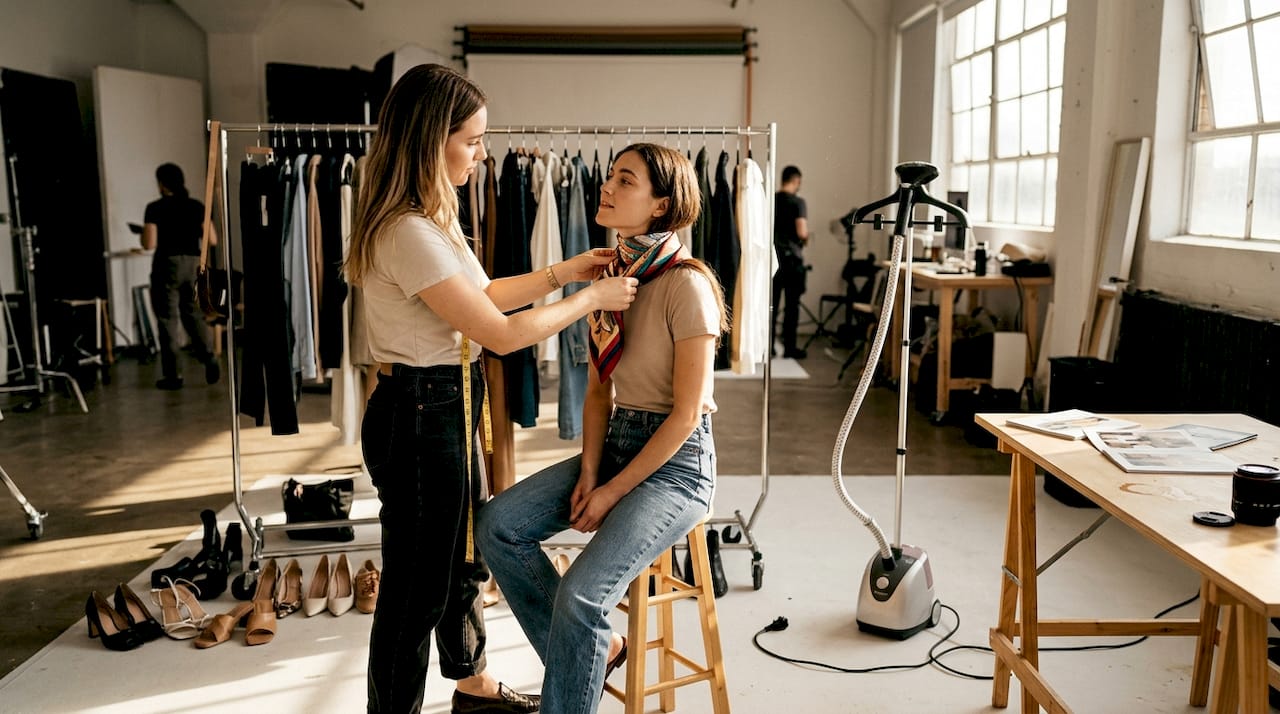
- Team assembly involves selecting a photographer whose aesthetic aligns with the concept, a stylist to source and coordinate looks, makeup artists and hair stylists to complete the vision, and models whose presence enhances the narrative
- Pull letters are sent to designer showrooms and PR agencies to secure clothing loans, with detailed information about publication, shoot date, and creative team
- Preparation includes creating shot lists, confirming locations, arranging transportation, and coordinating schedules across all team members
- Execution on set requires directing models, adjusting styling between shots, managing lighting and composition, and maintaining the creative vision throughout the day
- Post-production involves selecting the strongest images, editing for color and composition, sequencing the story, and submitting to magazine platforms for publication consideration
Pro Tip: Create detailed mood boards that go beyond aesthetic inspiration to include specific pose references, lighting diagrams, and styling notes. This level of preparation ensures everyone on your team understands the vision before arriving on set.
The importance of each team member cannot be overstated. Stylists bring luxury styling tips and access to designer pieces that elevate the editorial. Photographers translate concepts into compelling images through technical skill and artistic vision. Makeup artists and hair stylists complete the transformation, ensuring every detail supports the narrative.
Designer loans present unique logistical challenges. You must maintain detailed tracking systems for borrowed pieces, provide insurance coverage, and return items in pristine condition. Pull letters should clearly state the publication’s reach and audience demographics, as designers evaluate whether the exposure justifies the loan.
| Production Phase | Time Investment | Key Activities |
|---|---|---|
| Conceptualization | 15-20% | Mood boards, theme development, research |
| Planning and Coordination | 60-65% | Team assembly, pull letters, location scouting, scheduling |
| Shoot Execution | 10-15% | On-set direction, styling adjustments, photography |
| Post-Production | 10-15% | Image selection, editing, sequencing, submission |
The role of fashion editors extends beyond creative direction to include strategic decisions about which stories to pursue and how they align with publication goals. Editors consider seasonal trends, cultural relevance, and reader interests when greenlighting editorial concepts.
Submission platforms vary by publication, but most require high-resolution images, detailed credits for all clothing and accessories, and information about the creative team. Understanding each publication’s aesthetic and editorial calendar increases your chances of acceptance.
Distinguishing editorial from commercial fashion work
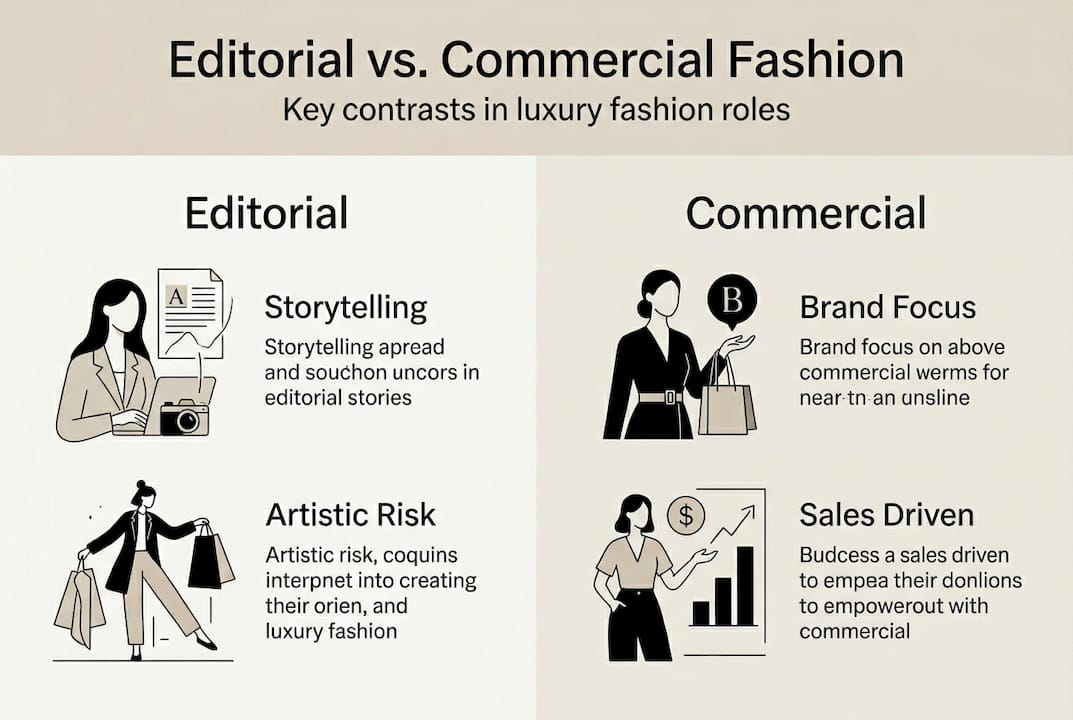
The fundamental differences between editorial and commercial fashion work shape how professionals approach each type of project. Editorial fashion is avant-garde, non-wearable, and concept-driven, unlike commercial fashion which is product-focused and accessible for mass appeal.
| Aspect | Editorial Fashion | Commercial Fashion |
|---|---|---|
| Primary Goal | Artistic expression and trendsetting | Product visibility and sales conversion |
| Styling Approach | Avant-garde, experimental, concept-driven | Wearable, accessible, product-focused |
| Creative Freedom | High, limited only by publication standards | Constrained by brand guidelines and commercial objectives |
| Audience | Industry insiders, fashion enthusiasts, tastemakers | Target consumers for specific products |
| Compensation | Often unpaid or low-budget, exposure-based | Paid assignments with clear commercial value |
| Validation | Publisher approval and editorial standards | Client approval and sales performance |
Editorial fashion thrives on pushing boundaries and challenging conventions. You might see models styled in ways that defy practical wearability, with multiple garments layered unexpectedly or accessories used in unconventional contexts. This approach creates visually striking images that inspire rather than instruct.
Commercial fashion photography serves different masters. Brands invest in these images to drive sales, which means every element must showcase products clearly and attractively. The model’s pose, lighting, and styling all work to highlight the garment’s features, fit, and appeal. While creative expression exists within commercial work, it operates within tighter parameters.
The challenges unique to editorial fashion include:
- Limited budgets requiring creative problem-solving and relationship building
- Physical demands of complex styling and long shoot days
- Competitive submission processes with no guarantee of publication
- Balancing artistic vision with practical constraints
Commercial work presents its own challenges, primarily the need to satisfy client expectations while maintaining creative integrity. However, commercial assignments typically offer better compensation and clearer success metrics.
Pro Tip: Develop skills in both editorial and commercial photography to build a sustainable career. Editorial work builds your creative portfolio and industry reputation, while commercial assignments provide financial stability and client relationships.
Understanding styling tips designer clothes helps bridge the gap between editorial creativity and commercial practicality. Many successful fashion professionals move fluidly between both worlds, applying editorial innovation to commercial projects and bringing commercial polish to editorial work.
The strongest portfolios demonstrate range across both categories. Potential clients and publications want to see that you can execute creative visions while also delivering commercially viable results. This versatility makes you valuable across different project types and budget levels.
The impact and evolving role of fashion editorials in luxury fashion
Fashion editorials function as creativity laboratories where trends are born and tested before reaching mainstream adoption. The personal luxury goods market reached €362 billion in 2023 with high image dominance in magazines, and editorials increasingly reflect cultural shifts like sustainability and inclusivity.
Editorials influence the luxury market through several mechanisms:
- Introducing new silhouettes, color combinations, and styling techniques that designers and retailers later adapt
- Creating aspirational imagery that shapes consumer desires and brand perceptions
- Establishing visual trends that cascade from high fashion to accessible price points
- Providing a platform for emerging designers and creative talent to gain visibility
The relationship between editorials and luxury brand strategy has evolved significantly. While brands once relied primarily on advertising to control their image, they now recognize editorial coverage as equally valuable for building cultural relevance. An editorial feature in a prestigious publication carries credibility that paid advertising cannot replicate.
Cultural shifts profoundly impact editorial content and direction. Fashion sustainability luxury guide principles increasingly inform editorial concepts, with shoots highlighting eco-friendly materials, circular fashion practices, and responsible production methods. This evolution reflects broader consumer values and industry accountability.
Inclusivity has transformed editorial casting and storytelling. Publications now showcase diverse models across age, size, ethnicity, and gender identity, recognizing that authentic representation strengthens both creative work and market relevance. This shift represents more than tokenism; it fundamentally changes whose stories get told and whose vision of beauty becomes aspirational.
“Modern editorials must balance artistic innovation with cultural responsibility, reflecting the values and diversity of contemporary luxury consumers.”
The financial realities of editorial production present ongoing challenges. Most editorial work operates on minimal budgets, relying on the creative team’s willingness to work for exposure and portfolio building. This model becomes increasingly difficult to sustain as professionals seek fair compensation for their expertise and labor.
Physical demands also factor into editorial sustainability. Complex styling, challenging locations, and long shoot days require significant energy and resources. The pressure to create increasingly spectacular imagery can push teams toward unsustainable practices.
Publisher validation remains essential to maintaining editorial authenticity. True editorials appear in publications with editorial independence, separated from advertorial content that blurs the line between editorial and advertising. This distinction preserves the credibility and influence that make editorials valuable.
The role of fashion editors luxury growth includes navigating these evolving dynamics while maintaining creative standards. Editors must balance artistic ambition with practical constraints, cultural relevance with timeless aesthetics, and innovation with sustainability.
Looking forward, editorials will continue evolving alongside technology and cultural values. Digital platforms expand distribution and audience reach, while new formats like video editorials and interactive content create fresh storytelling opportunities. The core purpose remains constant: using fashion as a medium for artistic expression that inspires, challenges, and shapes cultural conversations.
Explore more about fashion editorial roles and luxury trends
Understanding fashion editorials opens doors to deeper insights about how luxury fashion operates and evolves. The creative processes, cultural influences, and industry dynamics we have explored represent just the beginning of this fascinating world.
If you are passionate about the intersection of creativity and luxury fashion, MaraFormigone offers expert perspectives on the forces shaping this industry. Explore detailed analyses of role of fashion editors luxury growth impact to understand how editorial leadership drives brand success. Discover how fashion sustainability luxury guide principles are transforming both editorial content and luxury business practices.
Pro Tip: Use your understanding of editorial processes to inform your own creative projects or career development. Whether you are building a portfolio, pitching concepts to publications, or analyzing trends, the principles behind successful editorials provide valuable frameworks for excellence.
Frequently asked questions
What is the difference between fashion editorial and commercial fashion?
Fashion editorials prioritize artistic storytelling and creative expression, using clothing as a medium for conceptual narratives rather than product promotion. Commercial fashion focuses on showcasing products to drive sales, with styling and photography designed to highlight garment features and appeal. Editorials appear in magazines with publisher validation, while commercial work serves brand objectives and advertising goals.
How is a fashion editorial planned and produced?
Editorial planning begins with conceptualization using mood boards that define visual direction, themes, and aesthetic elements. You then assemble a creative team including a photographer, stylist, makeup artist, and models whose skills align with the concept. Pull letters secure designer clothing loans, while detailed shot lists and schedules coordinate logistics. The shoot execution follows the planned vision, with post-production editing and sequencing completing the story before submission to publications.
Why are fashion editorials important in the luxury industry?
Editorials function as creativity laboratories where new trends, styling techniques, and visual languages emerge before reaching commercial adoption. They enhance luxury brand storytelling by providing credible, artistically validated coverage that advertising cannot replicate. Editorials connect luxury brands with cultural values like sustainability and inclusivity, helping them remain relevant to evolving consumer expectations. This influence supports market growth by shaping aspirations and perceptions that drive luxury purchases.
How are sustainability and inclusivity impacting fashion editorials?
Modern editorials increasingly feature eco-friendly materials, circular fashion concepts, and storylines that highlight responsible production practices. Publications showcase diverse models across age, size, ethnicity, and gender identity, creating more authentic and representative fashion narratives. These shifts align editorial creativity with global cultural values, ensuring editorials maintain their influence and relevance. The evolution reflects both consumer demand and industry recognition that sustainability and inclusivity strengthen creative work and market position.

