
TL;DR:
- Italian fashion is rooted in centuries of artisan tradition, emphasizing quality over hype.
- Craftsmanship, material sourcing, and regional expertise distinguish Italian luxury from other European brands.
- Investing in genuine Italian pieces offers longevity, sustainable value, and authentic storytelling.
Not all luxury fashion is created equal. While many designer labels trade on hype and seasonal buzz, Italian fashion operates on an entirely different level, one built over centuries of artisan tradition, family legacy, and an obsessive commitment to quality. The “Made in Italy” label is globally recognized as a mark of excellence and investment value, signaling sophisticated taste that goes far beyond a logo. This article breaks down exactly why Italian fashion commands such enduring prestige, what makes its craftsmanship genuinely superior, and how you can make smarter choices when building a wardrobe that lasts.
Table of Contents
- The heritage and symbolism of ‘Made in Italy’
- Exceptional craftsmanship: What sets Italian fashion apart?
- Longevity, investment value, and sustainable luxury
- Challenges and evolutions in the Italian fashion industry
- Why Italian fashion’s mystique endures—our perspective
- Experience authentic Italian luxury for yourself
- Frequently asked questions
Key Takeaways
| Point | Details |
|---|---|
| Symbol of prestige | Italian fashion instantly signals status and discerning taste through its heritage and international reputation. |
| Unmatched craftsmanship | Master artisans and premium materials make Italian pieces truly exceptional and built to last. |
| Lasting investment | High resale value and timeless design mean Italian fashion works as both statement and asset. |
| Sustainability leadership | Eco-friendly sourcing and local production reinforce Italy’s position at the forefront of responsible luxury. |
The heritage and symbolism of ‘Made in Italy’
Italian fashion is not a trend. It is a living tradition, shaped by generations of artisans who passed their skills from parent to child, from workshop to workshop, across hundreds of years. Florence, Milan, Naples, and Venice each developed distinct fashion identities, and those regional identities still inform how Italian houses approach design today. When you wear a piece from an Italian brand, you are wearing a story.
This is what separates Italian fashion from the broader luxury market. Many high-end labels are built on marketing budgets and celebrity endorsements. Italian fashion houses, by contrast, built their reputations on product. The authenticity in luxury fashion that Italian brands deliver is not manufactured. It is earned through decades of consistent execution.
The emotional appeal of Italian labels runs deep. Wearing Gucci, Prada, or a lesser-known Florentine leather house is not just about status. It is about belonging to a lineage of taste. Connoisseurs understand this intuitively. The label communicates that you did not just spend money. You made a considered choice.
Here is what makes Italian heritage so compelling for high-net-worth buyers:
- Generational knowledge: Artisan families have refined their techniques over centuries, not quarters.
- Regional specialization: Tuscany for leather, Milan for tailoring, Murano for glass and jewelry. Each region has a distinct craft identity.
- Cultural integration: Fashion in Italy is not separate from culture. It is embedded in it, which is why Italian design feels more human and less corporate.
- Investment mindset: 35% of high-net-worth individuals cite timeless quality as their primary reason for choosing Italian brands, and that figure speaks to a buyer who thinks in decades, not seasons.
“‘Made in Italy’ is not just a label. It is a promise backed by centuries of craft, culture, and uncompromising standards.”
For anyone serious about understanding high-end style, Italian fashion is the clearest entry point into what luxury actually means at its core.
Exceptional craftsmanship: What sets Italian fashion apart?
Craft is the word that defines Italian fashion. Not design alone, not branding, but the physical act of making something with skill and intention. Italian artisans approach a garment or accessory the way a sculptor approaches marble. Every cut, stitch, and finish is deliberate.
The Italian luxury market was valued at approximately $20.4 billion in 2023, with the fashion segment accounting for 42% of that figure. The industry employs around 500,000 artisans, and 80% of firms are family-owned, which means quality control is personal, not just procedural. When a family’s name is on the product, corners do not get cut.
Material selection is where Italian craftsmanship becomes most visible. Italian tanneries, particularly in Tuscany, are famous for vegetable-tanned leathers that develop a rich patina over time. Unlike chrome-tanned alternatives, vegetable-tanned leather improves with age, taking on the character of its owner. It also involves shorter, more localized supply chains, which reduces environmental impact and maintains tighter quality oversight.
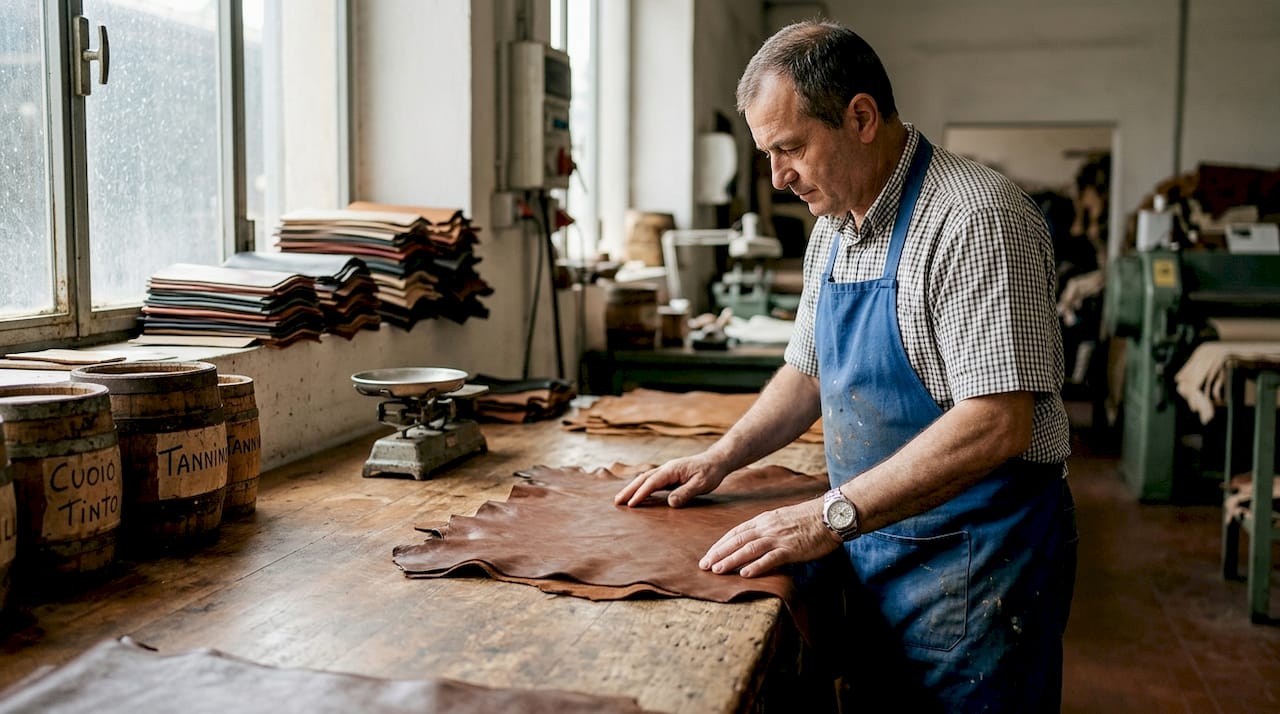
Pro Tip: When evaluating an Italian leather piece, look for visible grain variation and a slightly firm texture when new. These are signs of genuine full-grain leather, which will soften and personalize with wear rather than crack or peel.
Here is a direct comparison of how Italian luxury fashion stacks up against other European luxury traditions:
| Feature | Italian luxury | French luxury | British luxury |
|---|---|---|---|
| Primary strength | Artisan craft and materials | Haute couture and branding | Tailoring and heritage tweeds |
| Ownership model | Mostly family-owned | Largely conglomerate-owned | Mix of independent and group |
| Material sourcing | Regional and traceable | Global with curated sourcing | Regional wool and leather |
| Patina and aging | Designed to improve with age | Often season-specific | Built for durability |
| Sustainability approach | Short chains, natural materials | Increasingly corporate ESG | Traditional, slow production |
For anyone serious about choosing timeless fashion, understanding these distinctions helps you invest with intention rather than impulse.
Longevity, investment value, and sustainable luxury
A well-made Italian piece does not go out of style. That is not a marketing claim. It is a structural reality. Italian design philosophy prioritizes proportion, material quality, and restrained elegance over trend-chasing, which means pieces remain wearable and desirable across decades.
54% of affluent buyers now prioritize “Made in Italy” certification specifically because of its connection to sustainability and verified provenance. This is a significant shift. Today’s luxury buyer is not just asking “does it look good?” They are asking “where was it made, by whom, and will it last?”
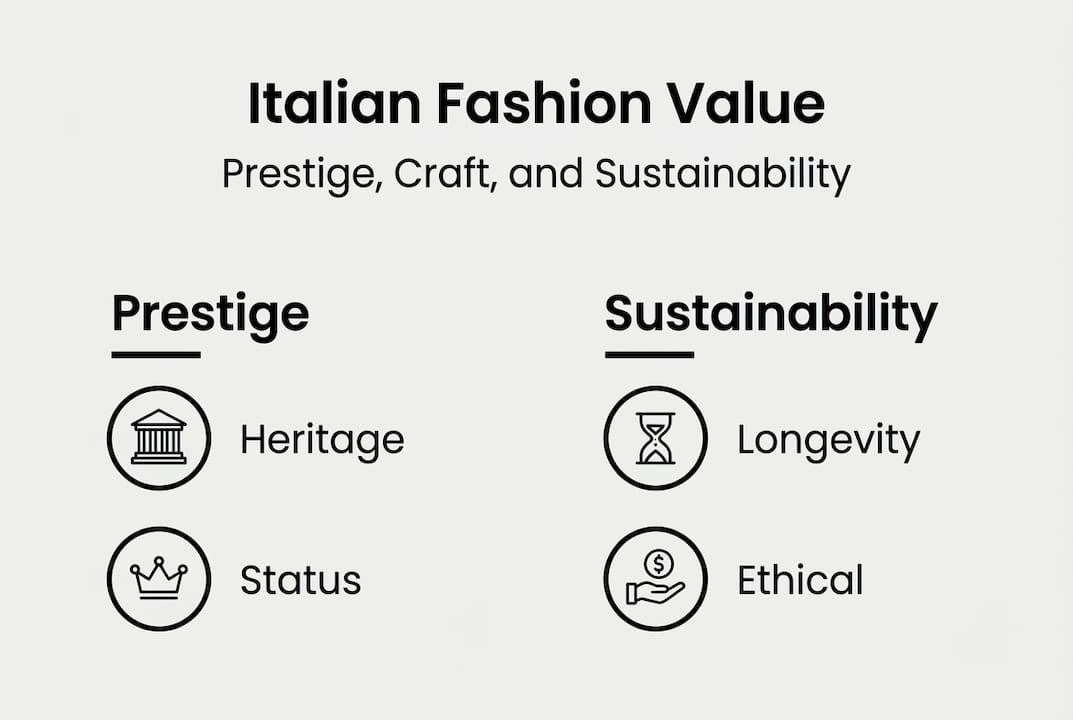
Italian fashion answers all three questions with confidence.
Here is how to evaluate whether an Italian fashion piece is a genuine investment:
- Verify provenance: Look for specific regional certifications or brand documentation that confirms Italian manufacturing, not just design.
- Assess material quality: Full-grain leather, natural fibers, and hand-finished details are indicators of longevity.
- Research the brand’s history: Brands with 30-plus years of consistent production have demonstrated staying power.
- Consider resale market performance: Strong secondary market prices signal that the broader market agrees on value.
- Examine construction details: Hand-stitched seams, reinforced stress points, and quality hardware indicate a piece built to last.
Pro Tip: Classic silhouettes in neutral or signature colorways consistently outperform trend-driven pieces on the resale market. When investing in designer accessories, prioritize the pieces a brand has produced consistently for years, not the limited-edition seasonal drops.
The fashion sustainability guide perspective is equally important here. Buying fewer, better pieces from Italian brands that use natural materials and ethical production is genuinely more sustainable than cycling through trend-driven fast luxury. The math is simple: one coat that lasts 20 years beats five coats that last four years each, in cost, in environmental impact, and in style.
Challenges and evolutions in the Italian fashion industry
No industry is without its tensions, and Italian fashion is navigating some significant ones right now. Understanding these challenges does not diminish Italian fashion’s appeal. It makes you a smarter buyer.
The most pressing issue is workforce. Factory closures reached 1,035 in Q2 2025 alone, driven by labor shortages and the retirement of skilled artisans without enough trained replacements. This is not a minor operational hiccup. It is a structural challenge that affects the entire supply chain.
Subcontracting is a related concern. As demand for Italian goods has grown globally, some brands have outsourced portions of production to non-Italian factories while retaining the “Made in Italy” label on a technicality. Italian law requires only a portion of production to occur in Italy for the label to apply, which creates room for inconsistency.
Supply chain transparency is now the clearest differentiator between brands that genuinely uphold Italian standards and those that trade on the label’s reputation. Forward-thinking brands are verticalizing their production, bringing more processes in-house to protect quality and credibility.
As a buyer, here is what to watch for:
- Full transparency disclosures: Brands that publish detailed supply chain information are more likely to be genuinely committed to Italian production.
- Vertical ownership: Brands that own their tanneries, mills, or workshops have stronger quality control.
- Artisan partnerships: Collaborations with named craftspeople or regional cooperatives signal authentic provenance.
- Avoid vague labeling: “Designed in Italy” or “Italian-inspired” are not the same as “Made in Italy.”
For those looking to shop smarter for luxury fashion, these signals are your best tools for separating genuine Italian craftsmanship from imitation.
Statistic: 1,035 Italian fashion factories closed in Q2 2025 alone, underscoring the urgency of supporting brands that invest in genuine artisan workforce development.
Why Italian fashion’s mystique endures—our perspective
Here is something the fashion industry rarely admits: most of what makes Italian fashion feel special cannot be measured. It is not just the thread count or the tannery region. It is the accumulated weight of intention behind every piece.
We believe the buyers who get the most from Italian fashion are those who stop chasing labels and start seeking stories. Who made this? Where did the leather come from? How long has this family been doing this? Those questions lead you to pieces that feel genuinely different because they are genuinely different.
The uncomfortable truth is that status and investment are not the same thing. A logo can signal status. Only real craft creates investment value. Italian fashion at its best offers both, but only when you buy with knowledge rather than impulse.
To curate a timeless wardrobe, focus on the intangibles: the way a well-made Italian jacket fits without tailoring, the way a leather bag softens and becomes more beautiful with use. Those qualities cannot be faked or mass-produced, and they are exactly what separates a wardrobe from a collection.
Experience authentic Italian luxury for yourself
Understanding the depth behind Italian fashion naturally leads to one question: where do you find pieces that actually live up to the standard?

At Mara Formigone, we curate only the pieces that reflect genuine Italian and European luxury values. Whether you are drawn to the structured elegance of Love Moschino shoulder bags or the refined detail of Smooder sunglasses, every item in our collection is chosen with the same criteria: authentic provenance, lasting quality, and undeniable style. If you are ready to invest in pieces that reward you for years, discover authentic Italian style and find your next statement piece.
Frequently asked questions
What makes Italian fashion brands different from other luxury labels?
Italian fashion is built on deep artisan heritage, with 80% of firms family-owned and 500,000 skilled craftspeople employed across the country, making each piece a genuine investment rather than a branded commodity.
Is ‘Made in Italy’ still a reliable mark of quality in 2026?
“Made in Italy” remains a strong quality signal, but smart buyers should look for transparent brands since factory closures and subcontracting can dilute authenticity if you are not paying attention.
How does Italian fashion address sustainability?
Leading Italian brands use vegetable-tanned leathers and localized supply chains that reduce environmental impact while producing materials that improve with age rather than degrade.
Why do Italian fashion pieces hold their value?
Italian designs combine timeless style and heritage with superior construction, which means they perform well on the secondary market and remain desirable long after the season they were purchased.
Recommended
- How to choose timeless fashion: luxury guide 2026 – MaraFormigone
- Authenticity in Luxury Fashion: The Mara Formigone Standard – MaraFormigone
- Why premium denim is worth the investment in 2026 – MaraFormigone
- Styling tips for designer clothes: 5 expert essentials 2026 – MaraFormigone
- Understanding jewelry craftsmanship for ethical luxury – Eternal Carat

