
Think luxury fashion requires flashy logos and bold branding? You’d be mistaken. Today’s most discerning consumers are gravitating toward quiet luxury, a movement redefining status through subtle craftsmanship and timeless design rather than conspicuous labels. Recent surveys reveal 50% of luxury buyers now prefer understated pieces over logo-heavy items. This guide explains quiet luxury’s core principles, why it matters to affluent shoppers, and how you can embrace this sophisticated aesthetic in your wardrobe.
Table of Contents
- Understanding Quiet Luxury: Definition And Core Attributes
- Why Quiet Luxury Matters: Consumer Motivations And Market Trends
- Craftsmanship And Sustainability: The Backbone Of Quiet Luxury
- Comparing Quiet Luxury And Traditional Luxury
- Common Misconceptions About Quiet Luxury
- Real-World Examples: Brands And Iconic Quiet Luxury Items
- How To Embrace Quiet Luxury: Practical Style Tips
- Discover More About Luxury Fashion Exclusivity
Key takeaways
| Point | Details |
|---|---|
| Quiet luxury emphasizes craftsmanship over logos | It prioritizes exceptional materials, artisanal techniques, and timeless design without visible branding. |
| Affluent consumers seek discreet status symbols | Buyers choose quiet luxury to express authenticity and refined taste rather than conspicuous consumption. |
| Quality materials and sustainability drive value | Premium fabrics and ethical sourcing justify higher prices while supporting longevity. |
| Market growth reflects changing consumer values | The quiet luxury segment is expanding as minimalism and authenticity resonate with modern shoppers. |
| Practical style tips enable authentic adoption | Starting with versatile staples and prioritizing fit helps you build a quiet luxury wardrobe successfully. |
Understanding quiet luxury: definition and core attributes
Quiet luxury represents a fundamental shift in how fashion communicates status and value. Unlike traditional luxury that announces itself through prominent logos and seasonal trends, quiet luxury speaks in whispers. It’s fashion for those who know, crafted for insiders who recognize quality without needing branded proclamations.
At its core, quiet luxury rejects overt branding in favor of subtlety. The labels exist, but they’re hidden inside garments or omitted entirely. What matters instead is the hand feel of exceptional fabrics, the precision of tailoring, and the thoughtful construction that only becomes apparent upon close inspection.
Several defining characteristics set quiet luxury apart:
- Superior craftsmanship using traditional techniques and artisanal skills
- Premium materials like cashmere, silk, and fine wool sourced from ethical suppliers
- Timeless silhouettes that transcend seasonal trends and remain relevant for years
- Functional design focused on wearability rather than spectacle
- Minimal or absent external branding that lets quality speak for itself
This approach contrasts sharply with contemporary fashion trends that often prioritize novelty and visibility. Where traditional luxury shouts, quiet luxury whispers. Where fast fashion chases trends, quiet luxury builds enduring wardrobes.
The philosophy extends beyond aesthetics. It represents a value system centered on authenticity, sustainability, and mindful consumption. Buyers invest in fewer pieces of higher quality, building collections that serve them across contexts and years.
Why quiet luxury matters: consumer motivations and market trends
Understanding why affluent shoppers embrace quiet luxury reveals deeper shifts in social values and status signaling. The motivations extend beyond fashion into psychology, economics, and cultural evolution.
Discreet status expression has replaced conspicuous consumption for many luxury consumers. Rather than broadcasting wealth through logos, sophisticated buyers signal refinement through knowledge and taste. This shift reflects growing cultural awareness around sustainability, authenticity, and personal values over performative displays.
Several key drivers fuel this preference:
- Desire for authenticity in an era of mass production and counterfeits
- Alignment with minimalist lifestyles prioritizing quality over quantity
- Social consciousness around sustainability and ethical production
- Professional contexts where overt luxury branding feels inappropriate
- Confidence to express status through knowledge rather than labels
Market data confirms this trajectory. The quiet luxury segment has grown 35% annually since 2023, outpacing traditional luxury categories. Brands emphasizing craftsmanship and subtle design report higher customer lifetime values and stronger brand loyalty compared to logo-focused competitors.
This movement particularly resonates with younger affluent consumers who value experiences and meaning over material displays. They research production methods, seek transparency around sourcing, and invest in thoughtful luxury outfit planning that reflects personal style rather than trend-chasing.
Economically, quiet luxury makes sense. Timeless pieces maintain value longer, require fewer replacements, and transition seamlessly between contexts. The initial investment proves more economical over time compared to constantly updating trend-driven wardrobes. For consumers seeking lasting value, quiet luxury offers both financial and aesthetic returns.
Craftsmanship and sustainability: the backbone of quiet luxury
Exceptional craftsmanship separates genuine quiet luxury from mere minimalism. The difference lies in construction details, material selection, and production methods that prioritize durability and beauty over cost efficiency.
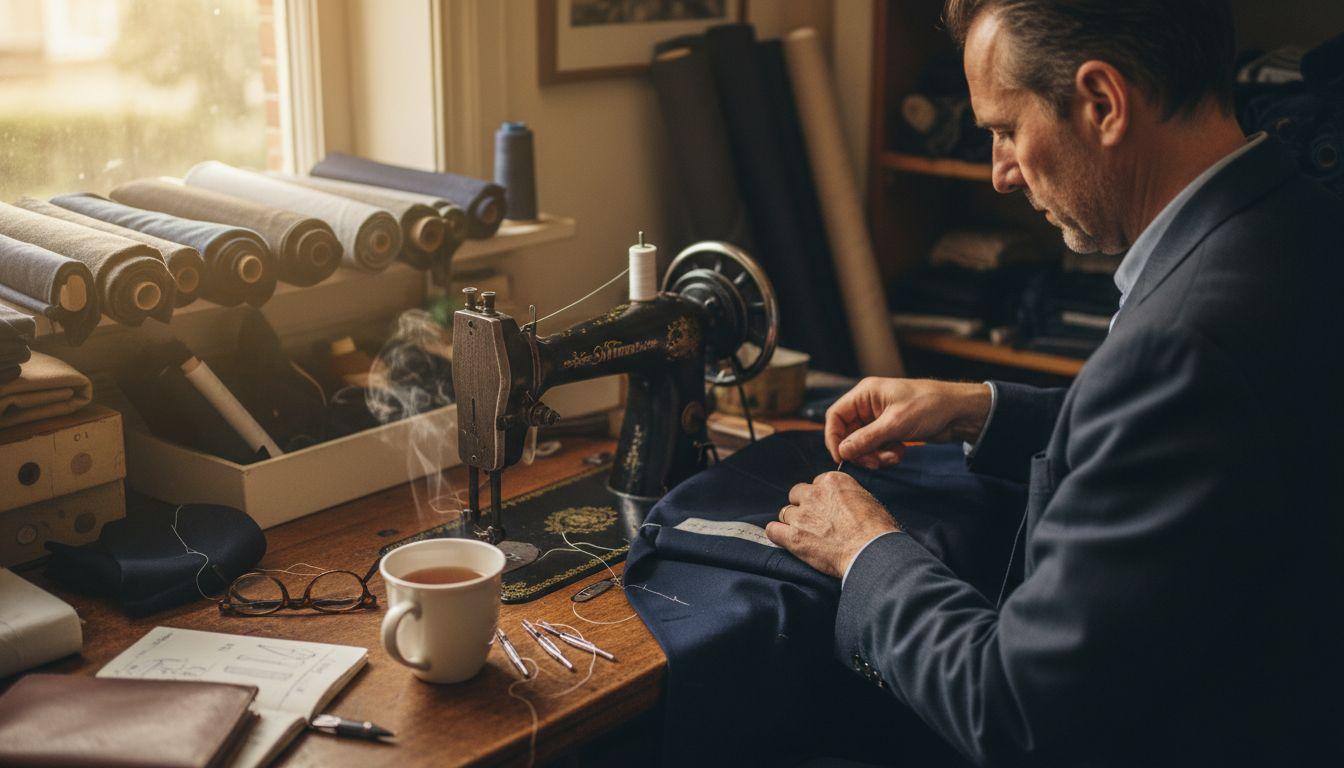
Artisanal techniques form the foundation. Hand-stitching, hand-finishing, and traditional tailoring methods create garments that fit better, last longer, and develop character over time. These processes require skilled craftspeople and significantly more production time than mass manufacturing, but the results justify the investment.
Quiet luxury products prioritize high-quality materials and artisanal production, enhancing value and longevity. Cashmere sourced from specific regions, silk woven using traditional looms, and leather tanned through time-intensive processes all contribute to pieces that improve with age rather than deteriorate.
Sustainability naturally aligns with quiet luxury principles:
- Ethical sourcing ensures materials come from responsible suppliers respecting workers and environments
- Durable construction reduces waste by creating garments that last decades rather than seasons
- Timeless design eliminates the need for constant replacement driven by trend cycles
- Transparent supply chains allow consumers to verify production claims and values alignment
This emphasis on quality and longevity also serves practical purposes. Superior materials resist pilling, fading, and wear. Expert construction maintains shape and structure through repeated wearing and cleaning. The result is clothing that performs better across its extended lifespan.
Pro Tip: When evaluating quiet luxury pieces, examine interior finishes and hidden details. Check seam allowances, lining quality, and button attachment methods. These invisible elements reveal whether a garment truly embodies quiet luxury values or merely mimics the aesthetic without substance.
Authenticity verification becomes crucial in quiet luxury’s subtle landscape. Without prominent logos, buyers must develop knowledge around fabric quality, construction techniques, and brand heritage to distinguish genuine pieces from counterfeits or lower-quality imitations.
Comparing quiet luxury and traditional luxury
Understanding the distinctions between quiet luxury and traditional luxury clarifies what makes each approach unique and valuable to different consumer segments. The differences extend across branding, design philosophy, consumer behavior, and market positioning.
| Aspect | Quiet Luxury | Traditional Luxury |
|---|---|---|
| Branding | Minimal or absent external logos | Prominent, visible brand identifiers |
| Design | Timeless silhouettes and neutral palettes | Trend-driven collections and seasonal statements |
| Materials | Focus on natural, premium fabrics | Mix of innovative and traditional materials |
| Status signaling | Discreet, insider recognition | Conspicuous, immediate identification |
| Consumer motivation | Authenticity and personal style | Social recognition and trend participation |
| Price justification | Craftsmanship and longevity | Brand prestige and exclusivity |
| Market growth | 35% annual increase 2023-2026 | 15% annual increase same period |
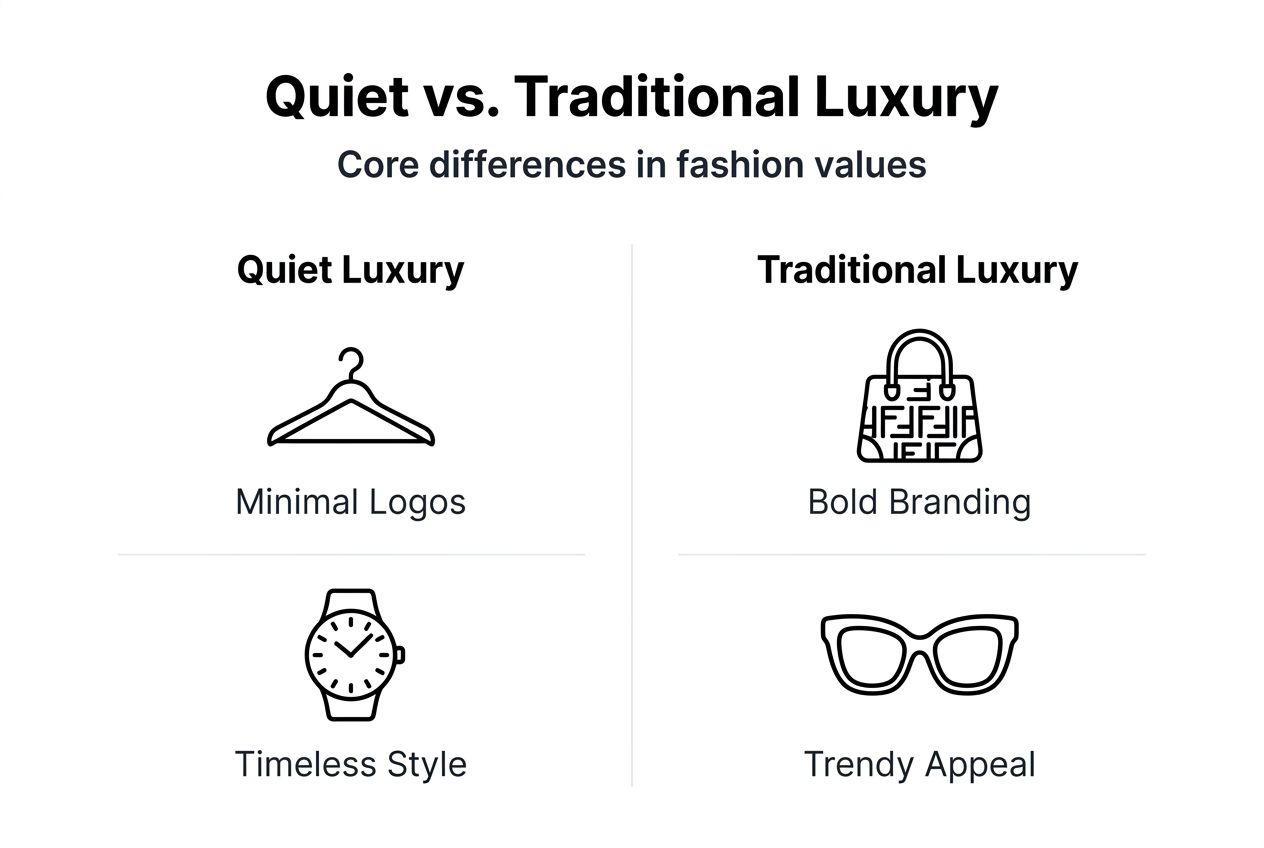
These contrasts reflect fundamentally different approaches to luxury consumption. Traditional luxury relies on brand equity built through marketing, celebrity endorsements, and heritage storytelling. The logo itself becomes valuable, sometimes more so than the product quality. Consumers purchase recognition and participation in aspirational lifestyles.
Quiet luxury inverts this formula. Brand equity exists but manifests through word-of-mouth among knowledgeable consumers rather than mass marketing. The product quality must justify the price independent of branding, as the label doesn’t provide instant validation. Consumers purchase excellence and alignment with personal values.
Both approaches serve legitimate purposes. Traditional luxury excels at creating desire, building cultural moments, and offering accessible entry points through logo-heavy accessories. Quiet luxury serves consumers seeking depth over breadth, investment over experimentation, and personal expression over social signaling.
Market data shows these segments increasingly coexisting rather than competing. Many consumers maintain hybrid wardrobes, selecting traditional luxury for certain contexts and quiet luxury for others. The growth disparity suggests shifting preferences but not complete replacement of established luxury models.
Common misconceptions about quiet luxury
Several persistent myths surround quiet luxury, creating confusion about what it represents and how it functions within the broader luxury market. Addressing these misconceptions helps consumers make informed decisions and appreciate quiet luxury’s genuine value.
The most common fallacy suggests quiet luxury lacks prestige because it omits visible branding. This completely misunderstands how sophisticated luxury consumers signal status. True connoisseurs recognize quality through tactile experience, construction details, and subtle design cues invisible to casual observers. The absence of logos represents confidence, not compromise.
Other frequent misconceptions include:
- Minimalist design indicates lower quality or reduced craftsmanship investment
- Quiet luxury pieces cost less because they lack recognizable branding
- Anyone can replicate quiet luxury style simply by removing logos from garments
- The movement represents rejection of luxury rather than evolution of luxury values
- Quiet luxury works only for certain age groups or professional contexts
Each misunderstanding stems from conflating external markers with intrinsic value. Quiet luxury demands more sophisticated evaluation because quality isn’t immediately apparent. This creates both opportunities and risks for consumers.
The subtlety that defines quiet luxury also makes it vulnerable to counterfeiting. 40% of counterfeit luxury goods detected in 2024 exploited subtle design cues typical of quiet luxury. Without obvious logos to replicate poorly, counterfeiters can more easily deceive buyers lacking expertise in fabric quality and construction standards.
Pro Tip: Develop relationships with authorized retailers and learn to identify authentic construction details specific to your preferred brands. Study how seams should look, how fabrics should feel, and how garments should drape. This knowledge protects against counterfeits while deepening your appreciation for genuine craftsmanship.
“Quiet luxury isn’t about hiding wealth or rejecting status. It’s about expressing both through knowledge, taste, and values rather than visible labels. The sophistication lies in what you know, not what others see.”
This perspective reframes quiet luxury as advancement rather than rejection, evolution rather than revolution. It builds on luxury traditions while adapting to contemporary values around sustainability, authenticity, and meaningful consumption.
Real-world examples: brands and iconic quiet luxury items
Certain brands have become synonymous with quiet luxury, exemplifying its principles through consistent commitment to craftsmanship, timeless design, and subtle branding. Understanding these exemplars provides concrete reference points for consumers building quiet luxury wardrobes.
The Row, founded by Mary-Kate and Ashley Olsen, represents perhaps the purest expression of quiet luxury in contemporary fashion. Every piece emphasizes perfect proportions, impeccable tailoring, and luxurious fabrics without any visible branding. Their collections prove that exceptional design needs no logo to communicate value to discerning buyers.
Loro Piana has built a century-long reputation on extraordinary materials and understated elegance. Their cashmere and vicuña pieces showcase how premium fibers and expert craftsmanship create garments that improve with age. The brand’s growth, particularly among younger affluent consumers, demonstrates quiet luxury’s expanding appeal.
Brunello Cucinelli combines artisanal Italian tailoring with philosophical commitment to humanistic capitalism. Every garment reflects both technical excellence and ethical production values. The brand proves sustainability and luxury naturally align when quality takes precedence over quantity.
Signature quiet luxury pieces include:
- Cashmere sweaters in neutral tones with exceptional softness and durability
- Tailored wool coats featuring timeless silhouettes and superior construction
- Silk blouses with hand-rolled hems and mother-of-pearl buttons
- Leather goods with minimal hardware and focus on leather quality
- Fine wool trousers with perfect drape and precision tailoring
These items share common characteristics. They work across contexts and seasons. They improve aesthetically as they age. They require minimal styling because the quality speaks for itself. They remain relevant regardless of trending colors or silhouettes.
Market performance confirms consumer enthusiasm. The best designer brands for quiet luxury report average sales increases of 40% annually, with particularly strong growth in core wardrobe pieces rather than statement items. This data reflects buyers building foundations rather than chasing trends.
Additional brands worth exploring include Jil Sander for architectural minimalism, Lemaire for intellectual design, and brands balancing heritage with contemporary values. Each offers entry points into quiet luxury at various price ranges and aesthetic approaches.
How to embrace quiet luxury: practical style tips
Transitioning to quiet luxury requires strategy, patience, and willingness to invest thoughtfully rather than impulsively. The approach differs fundamentally from trend-driven shopping, focusing instead on building a cohesive wardrobe of versatile, high-quality pieces.
Start by identifying versatile staples that transcend seasonal trends and work across multiple contexts:
- Begin with perfectly tailored neutral trousers in navy, gray, or black wool
- Add a cashmere sweater in a shade that complements your complexion
- Invest in a structured coat that works for both professional and casual settings
- Select a silk blouse that transitions from day to evening effortlessly
- Choose leather shoes in classic silhouettes prioritizing comfort and quality
- Build outward from these foundations, adding pieces that complement existing items
Prioritize fit above all else. Even exceptional fabrics and construction fail if proportions don’t flatter your body. Work with skilled tailors to adjust pieces for perfect fit. The investment in alterations often matters as much as the garment cost itself.
Fabric quality determines longevity and wearing experience. Learn to recognize superior materials through touch, drape, and weight. Natural fibers generally outperform synthetics in quiet luxury contexts. Understand that exceptional fabrics often require specific care but reward that attention with extended lifespan.
Minimize visible branding by selecting pieces without external logos or prominent hardware. If you love a brand known for conspicuous branding, explore their less logo-heavy lines or vintage pieces from eras emphasizing subtlety over status signaling.
Pro Tip: Before purchasing, ask yourself whether you’d love the piece without the label. If the answer is no, reconsider the investment. Quiet luxury pieces should justify their cost through quality and design rather than brand association alone.
Sustainability naturally emerges from quiet luxury principles. Buying fewer, better pieces reduces overall consumption. Choosing durable items decreases replacement frequency. Expert styling tips for designer clothes help maximize versatility, allowing smaller wardrobes to serve broader needs.
Develop patience around wardrobe building. Quiet luxury rewards thoughtful accumulation over impulsive purchasing. Save for exceptional pieces rather than compromising on quality. The practical approach to luxury finishes applies equally to fashion, emphasizing strategic investment in foundations before addressing details.
Discover more about luxury fashion exclusivity
Ready to deepen your understanding of luxury fashion and refine your personal style? MaraFormigone offers comprehensive resources helping you navigate the world of designer fashion with confidence and sophistication.
Explore our complete guide to fashion exclusivity to understand how limited production and careful curation create genuine value. Learn expert styling essentials that help you maximize your wardrobe’s versatility while maintaining the subtle elegance quiet luxury demands. Discover the best designer brands offering exceptional quality and timeless design. Browse our curated selections from brands embodying quiet luxury principles, each piece chosen for craftsmanship, materials, and enduring style that transcends temporary trends.
Frequently asked questions
What is quiet luxury in fashion?
Quiet luxury refers to high-end fashion emphasizing exceptional craftsmanship, premium materials, and timeless design without visible logos or overt branding. It communicates status through quality and subtlety rather than conspicuous brand identifiers.
Why do affluent consumers prefer quiet luxury?
Sophisticated buyers choose quiet luxury to express refined taste, authenticity, and personal values rather than seeking social recognition through logos. It aligns with minimalist lifestyles, sustainability priorities, and confidence in expressing status through knowledge rather than visible displays.
How can I verify quiet luxury authenticity?
Authenticate quiet luxury pieces by examining fabric quality, construction details, and interior finishes rather than relying on logos. Purchase from authorized retailers, study brand-specific construction signatures, and develop tactile familiarity with premium materials to distinguish genuine pieces from counterfeits.
What are essential quiet luxury wardrobe staples?
Start with perfectly tailored neutral trousers, a cashmere sweater, a structured coat, a silk blouse, and quality leather shoes. These versatile foundations work across contexts while showcasing the superior materials and craftsmanship that define quiet luxury.
How does quiet luxury differ from minimalism?
While both embrace simplicity, quiet luxury specifically emphasizes exceptional quality, premium materials, and artisanal craftsmanship at luxury price points. Minimalism focuses on aesthetic simplicity and can exist at any price range, whereas quiet luxury requires the substance behind the understated style.
Recommended
- A Guide to Luxury Fashion for Women – MaraFormigone
- Types of Luxury Footwear in 2026: 58% Market Share Insights – MaraFormigone
- Luxury Outfit Planning Guide: Boost Confidence by 40% – MaraFormigone
- Complete Guide to Fashion Exclusivity in Luxury – MaraFormigone
- 58% of luxury shoe market: formal shoes for notaries – MySartorial