
Let's get right to it. The fundamental difference between a midi and a maxi dress boils down to one simple thing: the hemline. A midi dress is designed to fall somewhere between the knee and the ankle, while a maxi dress sweeps down to the ankle or even grazes the floor.
This single detail might seem minor, but it completely transforms the silhouette and opens up entirely different worlds of styling.
Midi vs Maxi A Quick Comparison
While the length is the most obvious distinction, your choice between a midi and a maxi will influence everything from the formality of your look to the shoes you wear. Each style has its own unique personality and purpose, making them both indispensable parts of a well-rounded wardrobe. Knowing their core differences is the key to picking the perfect dress for any moment.
This visual guide perfectly illustrates that core distinction, showing exactly where each hemline is meant to hit.
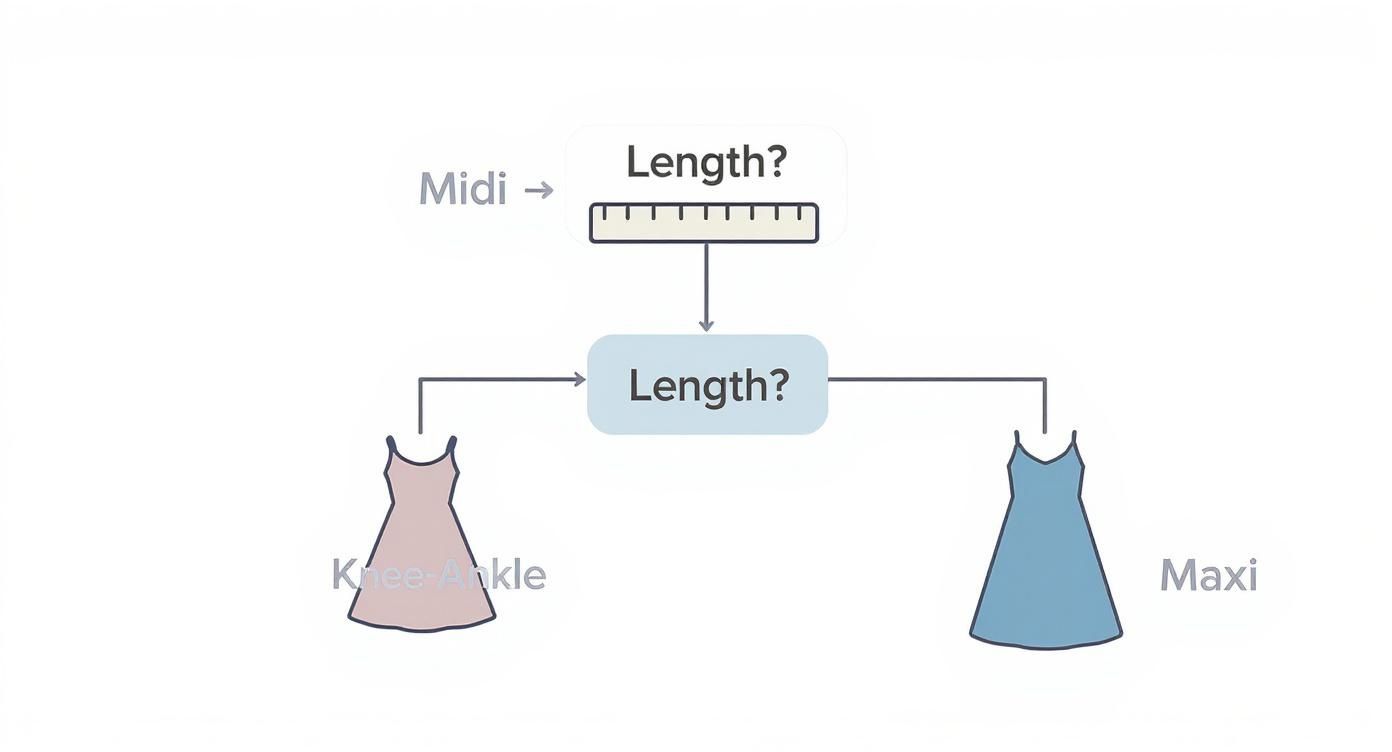
As you can see, it all starts with the length. This is the first and most critical factor that sets these two beloved dress styles apart.
Key Differences At a Glance
To simplify things, here’s a straightforward breakdown of how these two styles compare across the most important categories. Think of this as your quick reference guide for styling, whether you're getting ready for a casual brunch or a black-tie wedding.
If you’re looking to explore a wider range of silhouettes, you might also want to discover the essential types of designer dresses every fashionista needs to build out your collection.
| Characteristic | Midi Dress | Maxi Dress |
|---|---|---|
| Hemline Length | Falls between the knee and ankle | Extends to the ankle or floor |
| Typical Silhouette | A-line, wrap, slip, bodycon | Flowing, empire waist, column |
| Best For | Semi-formal events, office wear, cocktail parties | Beach vacations, formal weddings, casual weekends |
| Common Pairings | Heels, ankle boots, blazers | Flat sandals, wedges, statement jewelry |
Ultimately, choosing between a midi and a maxi dress depends on the occasion and the overall vibe you want to create.
The midi often gives off a polished, modern feel that’s perfect for showcasing a fabulous pair of shoes. In contrast, the maxi delivers an effortless, flowing elegance with graceful coverage.
The Modern Appeal of the Midi Dress
The midi dress has become a true essential in modern fashion, and it's easy to see why. Valued for its incredible adaptability, its signature hemline—falling somewhere between the knee and the ankle—strikes a perfect balance between sophistication and practicality. This isn't just some fleeting trend; it’s a staple that reflects a desire for versatile, lasting pieces in our wardrobes.
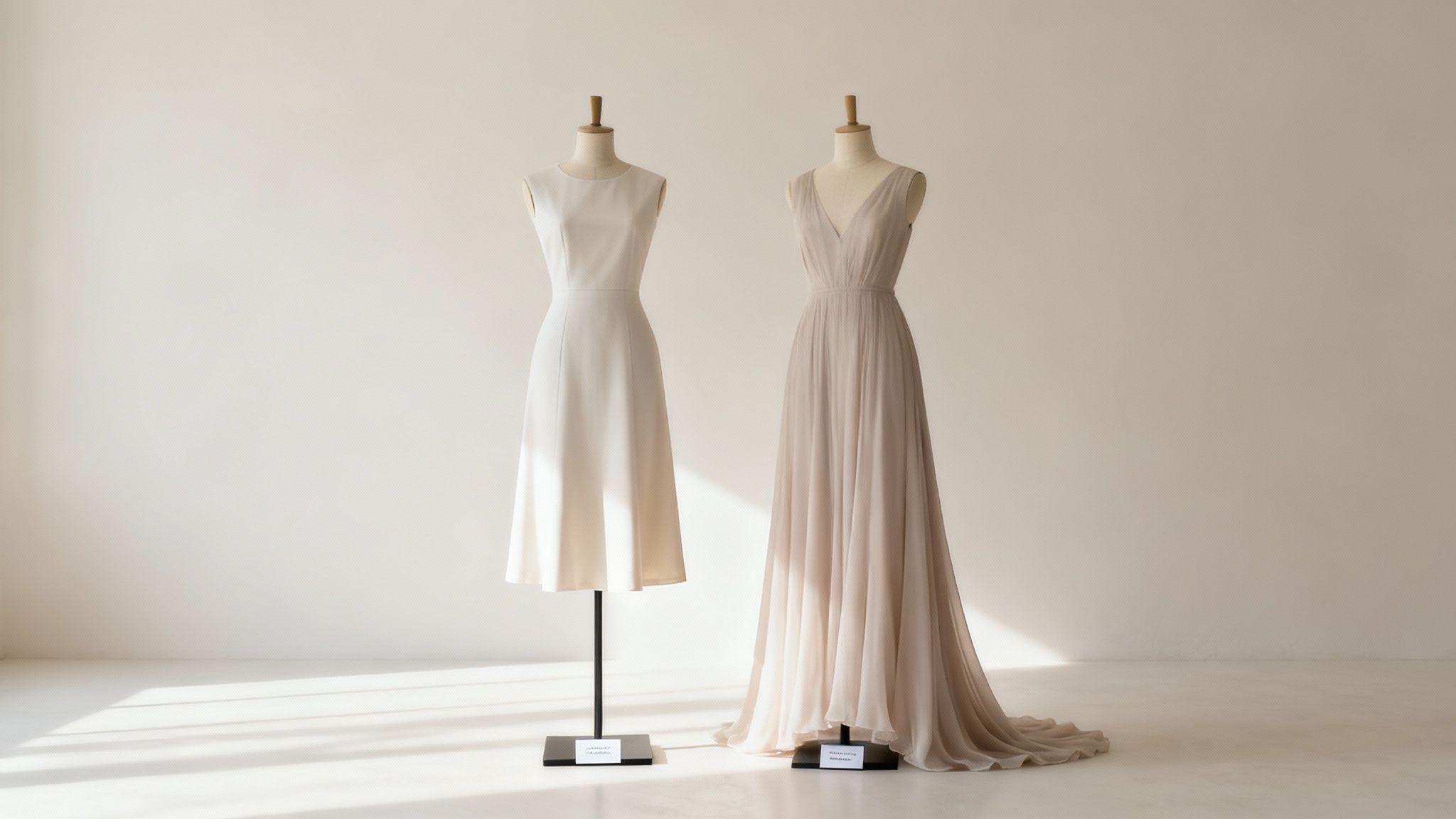
This elegant silhouette moves seamlessly from the office to a cocktail hour, making it one of the hardest-working pieces you can own. The magic of the midi is how it can feel both modest and completely contemporary, all depending on how you style it. It offers plenty of coverage without ever feeling frumpy and provides the perfect frame for showing off your favorite footwear, whether that's a classic pump or a chic ankle boot.
The numbers back this up, too. The global midi dress market was valued at around $8.2 billion and is expected to hit $14.6 billion by 2033, growing at a steady clip of 6.7% each year. This surge is driven by women looking for beautiful clothes that can do it all, closing the gap between formal wear and everyday comfort. You can dive deeper into this fashion market trend on marketintelo.com.
The Power of Fabric and Fit
The way a midi dress hangs and moves all comes down to the fabric. This choice is everything—it defines the dress's purpose and feel, turning one silhouette into a dozen different possibilities.
- Structured Fabrics: Think crisp cotton, sturdy twill, or a heavier crepe. These materials create a clean, almost architectural shape that’s perfect for the office or a formal daytime event where you want to look polished and put-together.
- Fluid Fabrics: On the other end of the spectrum, you have materials like silk, satin, and rayon that offer a soft, flowing drape. These fabrics move beautifully with you, creating an effortless elegance that’s ideal for a wedding, dinner party, or any romantic occasion.
The true appeal of the midi dress is its chameleonic nature. The same cut can appear professional in a structured wool and romantic in a flowing silk, offering unparalleled versatility for the modern woman's wardrobe.
A Smart Wardrobe Investment
Beyond just looking good, the midi dress is a smart, strategic addition to any collection. Its length is wonderfully seasonless. You can wear it with bare legs and sandals in the summer, then layer it with tights, boots, and a beautiful coat when the weather turns cold. This year-round potential is what makes it such a great investment.
To truly capture its beauty, top-tier presentation is key, which is why high-resolution product photography for new dresses is so important for showcasing detailed fabrics and modern cuts online. Designers love the midi's balanced proportions, as it gives them the perfect canvas for everything from bold, artistic prints to quiet, textural details.
Ultimately, its ability to adapt to different occasions, body types, and seasons confirms its status as an indispensable modern classic.
Understanding The Effortless Maxi Dress
The maxi dress stands apart with its floor-sweeping hem and graceful elongation. Unlike a midi’s crisp modern edge, this gown feels both dramatic and utterly comfortable. It’s the kind of piece you throw on and instantly feel poised.
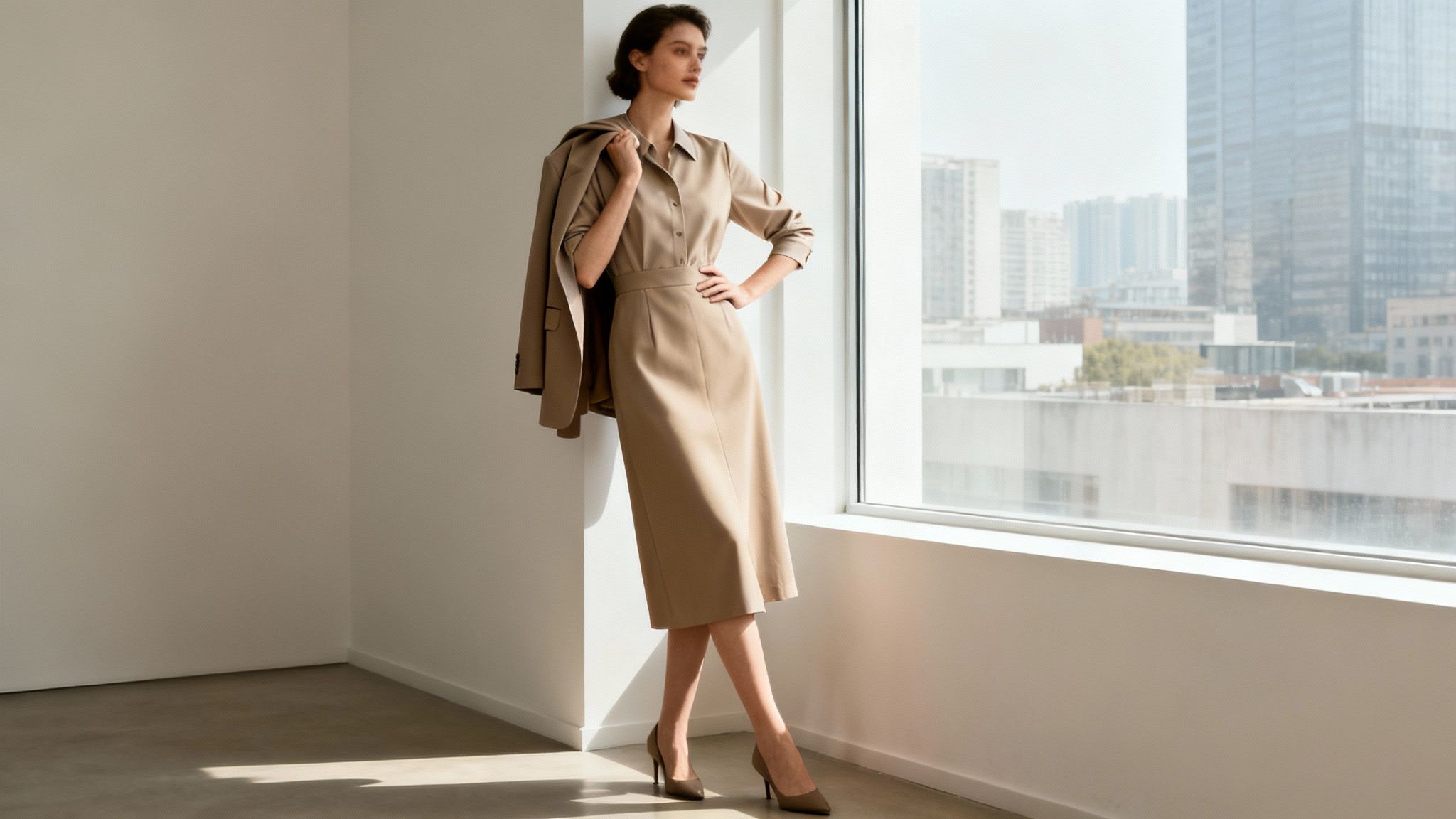
From a sunlit seaside stroll to an elegant evening gala, the maxi dress delivers on style and ease. A cinched waist, a plunging V-neck or a sleek halter transforms it from everyday boho to refined red-carpet ready.
The global appetite for this flattering silhouette is nothing short of impressive. In fact, the maxi dress market was valued at USD 13.4 billion in recent years and is forecast to climb to USD 21.7 billion by 2030. For a deeper dive into these figures, check out the Maxi Dress Market Insights.
From Casual To Couture The Role Of Fabric
Choosing the right material can shift a maxi dress from laid-back to luxe in an instant. Fabric weight, texture and drape dictate where—and how—you’ll wear your dress.
-
Breezy and Casual Fabrics
Lightweight cotton, soft jersey or airy linen breathe easily, perfect for weekend markets and warm-weather escapes. -
Luxe and Formal Fabrics
Silk, chiffon, satin or velvet introduce fluid movement and subtle shine, elevating your look for weddings, galas and sophisticated soirées.
The magic of a maxi dress lies in its ability to feel effortlessly put-together while allowing you to move freely. It’s a wearable blank canvas for both vibrant prints and minimalist statements.
The Maxi Dress As A Style Statement
A maxi dress isn’t just an outfit—it’s an attitude. Its sweeping lines carry a sense of freedom and confidence wherever you go.
Keep accessories simple: a slender belt, delicate earrings and suede sandals can turn casual fabrics into weekend-ready ensembles. Swap to metallic heels, a clutch and layered necklaces for a formal twist that makes heads turn.
Whether you’re drifting through a coastal village or stepping onto a ballroom floor, the maxi dress brings length, movement and undeniable poise. It’s a timeless investment for anyone who values comfort without compromising on chic.
Choosing the Right Dress for Your Body Type
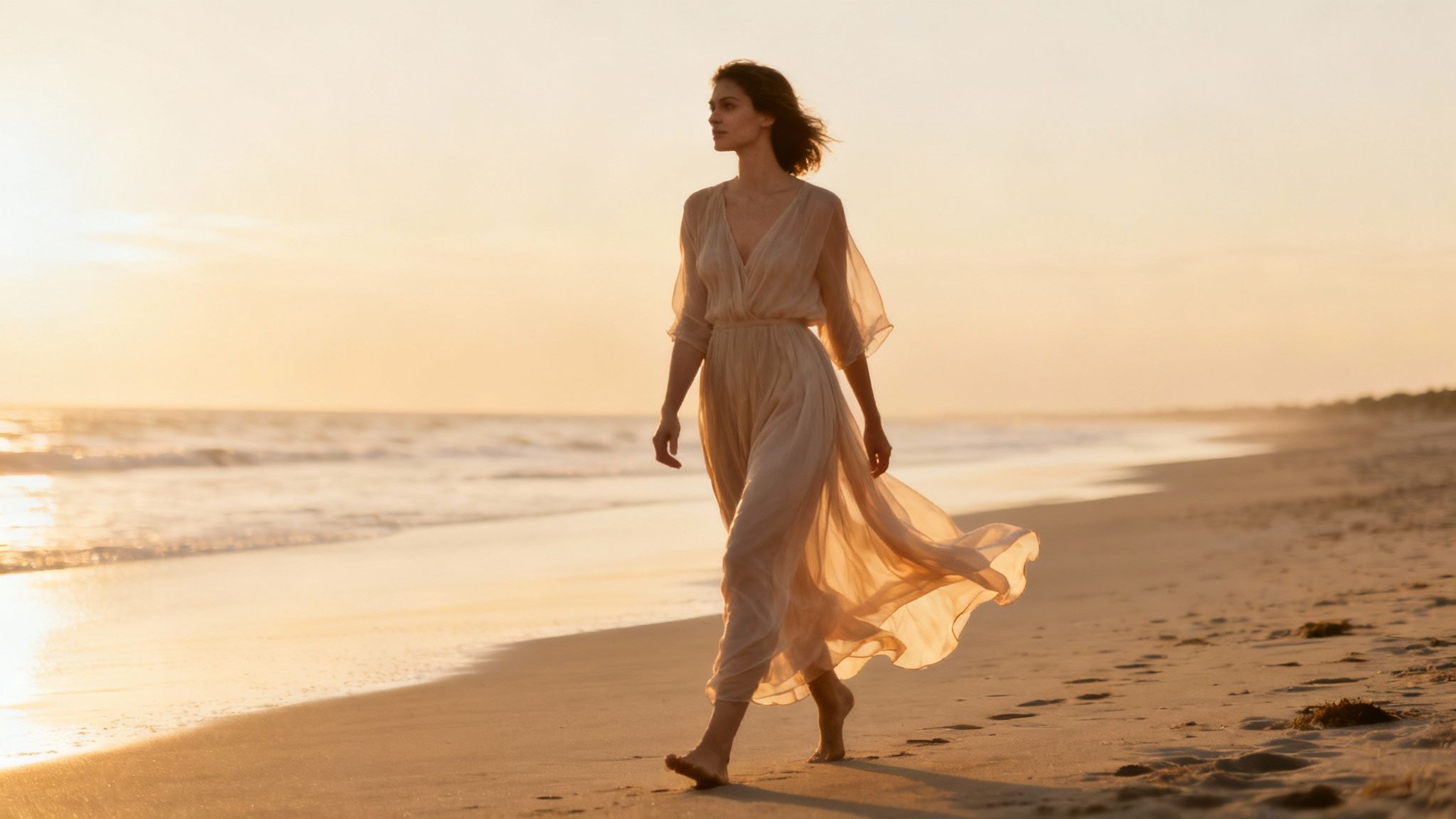
Knowing the difference between midi and maxi dress lengths is just the first step. The real magic happens when you choose a silhouette that not only suits the event but truly celebrates your unique shape, letting you walk into any room with poise. Both lengths have their own distinct strengths, and learning how to play with them can transform your entire look.
Think of these suggestions less as strict rules and more as a starting point for showcasing your best features. It’s all about creating visual balance and playing with proportions to your advantage. At the end of the day, your personal style and comfort should always lead the way.
Flattering Petite Frames
For petite women, the goal is often to create an illusion of height. It might sound counterintuitive, but the right maxi dress can be your best friend, working wonders to elongate your frame. The trick is to look for styles with an empire waist or a high, defined waistline; this visually lifts your natural waist, making your legs appear longer.
Midi dresses can be equally stunning. Just be sure to choose a fitted or body-skimming silhouette that doesn't overwhelm you with excess fabric. A midi that hits just below the knee, especially when paired with heels, draws a clean, uninterrupted line.
Key Insight for Petites: Steer clear of midi hems that land at the widest part of your calf. This can visually shorten the leg. Instead, aim for a hemline that falls either just below the knee or closer to the ankle to maintain that long, fluid line.
Highlighting Taller Silhouettes
If you're tall, you can carry the inherent drama of both midi and maxi dresses with incredible ease. A floor-sweeping maxi in a striking print or a rich, saturated color creates a breathtaking, statuesque effect that is both grand and graceful. You have the luxury of playing with more voluminous silhouettes without fear of being swamped.
The midi length is also exceptionally chic on a taller frame, as it intentionally breaks up your vertical line in a sophisticated way. It’s the perfect canvas to show off a pair of statement shoes, whether they’re elegant ankle boots or a pair of killer heels, adding another dimension to your outfit.
Defining Curvy Figures
For curvy body types, it’s all about accentuating your gorgeous shape. Wrap dresses, in both midi and maxi lengths, are a universally flattering secret weapon. They cinch in at the narrowest part of your torso while creating an elegant V-neckline, gracefully skimming over your hips for a perfectly balanced silhouette.
An A-line cut is another fantastic option. As a maxi, it flows away from the body to create a soft, structured look. As a midi, an A-line skirt highlights the waist and adds a touch of timeless femininity. If you’d like to explore this further, our guide on how to dress for your body type offers more in-depth advice.
Shopping online can make it difficult to imagine how a particular cut will drape on your body. Thankfully, modern technology can help bridge that gap. When you're weighing a midi against a maxi, innovative tools like virtual dressing rooms can give you a much clearer picture, helping you feel more confident in your choice before you even commit.
How to Style Your Dress for Any Occasion
Knowing the difference between a midi and maxi is one thing; styling them is where the real magic happens. The right accessories don't just complete an outfit—they completely transform it. You can take the very same dress from a casual daytime coffee run to an elegant evening affair with just a few thoughtful swaps.
A great midi dress is one of the most versatile pieces you can own. For the office, I love pairing a structured midi with a sharp blazer and classic pointed-toe heels. It creates an instantly powerful, put-together silhouette. Come the weekend, that same dress gets a new life with a simple denim jacket and a great pair of ankle boots for a look that’s effortlessly cool.
Mastering Different Dress Codes
Figuring out what to wear for a specific dress code can be a headache, but both the midi and maxi offer brilliant solutions. The trick is always to let the formality of the event guide your choice of fabric and accessories.
- For Cocktail or Semi-Formal Events: A silk or satin midi dress is my go-to recommendation. It feels modern and chic, especially when paired with delicate strappy heels and a minimalist clutch.
- For Formal Weddings or Galas: This is where the maxi dress reigns supreme. A sweeping, floor-length gown in a rich fabric like velvet or chiffon makes an unforgettable statement. Finish the look with stunning jewelry, an elegant updo, and a metallic clutch to really own the room.
- For Casual Outings and Vacations: You simply can't beat a breezy cotton maxi. I always style mine with flat leather sandals, a big woven tote, and my favorite oversized sunglasses. It’s the perfect uniform for exploring a new city or settling in for a long seaside lunch.
The secret to styling is all about proportion. A midi dress is the perfect opportunity to show off incredible shoes, while a maxi dress gives you a beautiful, long canvas to play with dramatic necklines and bold jewelry.
Elevating Your Look with Accessories
Think of accessories as the final, essential brushstrokes on your sartorial canvas. They're what pull everything together and infuse your personality into the look, adapting your dress for any setting.
With midi dresses, a belt can be your best friend. Cinching a belt at your natural waistline instantly adds definition to A-line or flowy styles, creating a more flattering, defined shape. When you’re styling a maxi, however, the eye is naturally drawn upward. This is your chance to play with layered necklaces or statement earrings to frame your face and balance the long, elegant lines of the dress.
If you’re looking for more ideas, our guide on how to style maxi dresses is packed with inspiration. In the end, choosing which dress to wear is all about deciding what story you want to tell that day.
To make it even easier, here is a quick guide to help you pair the right accessories for any event.
Accessory Pairing Guide
| Occasion | Midi Dress Pairings | Maxi Dress Pairings |
|---|---|---|
| Weekend Brunch | White sneakers, denim jacket, crossbody bag | Flat leather sandals, woven tote, straw hat |
| Office/Business | Pointed-toe heels, structured blazer, leather tote | (Generally less common) Low block heel, cardigan |
| Cocktail Party | Strappy heels, metallic clutch, delicate jewelry | Heeled mules, statement earrings, small shoulder bag |
| Formal Wedding | Embellished block heels, elegant shawl, minaudière | Stilettos, dramatic necklace or earrings, formal clutch |
| Beach Vacation | Espadrilles, sunglasses, simple gold hoops | Barefoot or flat sandals, layered bracelets, beach bag |
This table serves as a starting point, but don't be afraid to experiment. The most stylish accessory is always your own confidence.
Answering Your Questions
https://www.youtube.com/embed/ThligBzaFJk
Even with a clear understanding of midi and maxi dresses, a few common questions always pop up. It’s one thing to know the definitions, but another to apply them to your own wardrobe and life. Let's tackle some of the most frequent queries so you can shop and style with absolute confidence.
Think of this as your go-to reference for those final little details that make all the difference.
Can I Wear a Maxi Dress If I Am Petite?
Absolutely! This is a common concern, but the right maxi dress can actually be incredibly flattering on a smaller frame. The trick is all about proportion and avoiding being swamped by fabric.
Look for styles with a high or empire waistline, as this visually raises your natural waist and makes your legs appear longer. Slender silhouettes, vertical stripes, or a solid, head-to-toe color are also your best friends—they create a beautiful, unbroken line that elongates your figure. A pair of wedges or block heels will give you a little lift, ensuring the hem just skims the tops of your feet instead of dragging.
What Shoes Work Best with a Midi Dress?
The midi dress puts your shoes on full display, so the pairing is crucial for creating that seamless, elegant leg line. Pointed-toe pumps, strappy heeled sandals, and chic mules are fantastic choices because they extend the line of the leg beautifully.
For a more modern, relaxed vibe, don't be afraid to try sleek ankle boots or even a pair of crisp, minimalist sneakers—they look especially great with A-line or flowy midi styles. The main thing to watch out for are heavy ankle straps, which can visually chop up your leg and make you appear shorter than you are.
A midi dress is the perfect frame for a statement shoe. It’s an opportunity to really let your footwear—and your personality—shine.
How Do I Choose Between a Midi and Maxi for a Wedding?
Let the invitation's dress code and the venue be your guide. For a formal, black-tie affair, a floor-sweeping maxi dress in a luxe fabric like silk, satin, or chiffon is the ultimate statement. Its inherent drama and elegance are perfectly suited to that level of grandeur.
A midi dress, on the other hand, is often the perfect modern solution for cocktail or semi-formal weddings. It hits that sweet spot between celebratory and sophisticated. For beach or garden weddings, a midi is also the more practical choice, keeping your hemline pristine and free from sand or grass.
Which Dress Length Is More Versatile for Year-Round Wear?
Both styles are surprisingly adaptable, but the midi dress probably takes the prize for all-season versatility. Its mid-calf length works with just about any shoe, from summer sandals to knee-high boots in the dead of winter.
A knit midi layered under a sharp wool coat is a truly timeless cold-weather outfit. That said, a long-sleeved maxi in a heavier fabric like velvet or a substantial knit can be just as cozy and chic. It really comes down to your personal style and how you prefer to layer.
At Mara Formigone, we believe that the right dress can transform not just your look, but your entire outlook. Whether you're drawn to the modern polish of a midi or the effortless elegance of a maxi, our curated collection of authentic luxury pieces is here to help you express your unique confidence. Explore our designer dresses and find the perfect silhouette to tell your style story.