

When you get a wedding invitation, that first feeling of excitement can sometimes give way to a classic moment of panic: what on earth am I going to wear? We've all been there. But figuring out the perfect outfit doesn't have to be stressful. The trick is to look at the invitation for clues.
Think of it this way: the couple has left you a roadmap. The dress code, the venue, and the season are your three biggest signposts. Getting a handle on these will guide you straight to an outfit that’s not just beautiful, but also appropriate and comfortable for the celebration.
This guide will walk you through how to use those clues to pull together a look you'll feel great in. No more guesswork, just a clear path to looking your best.
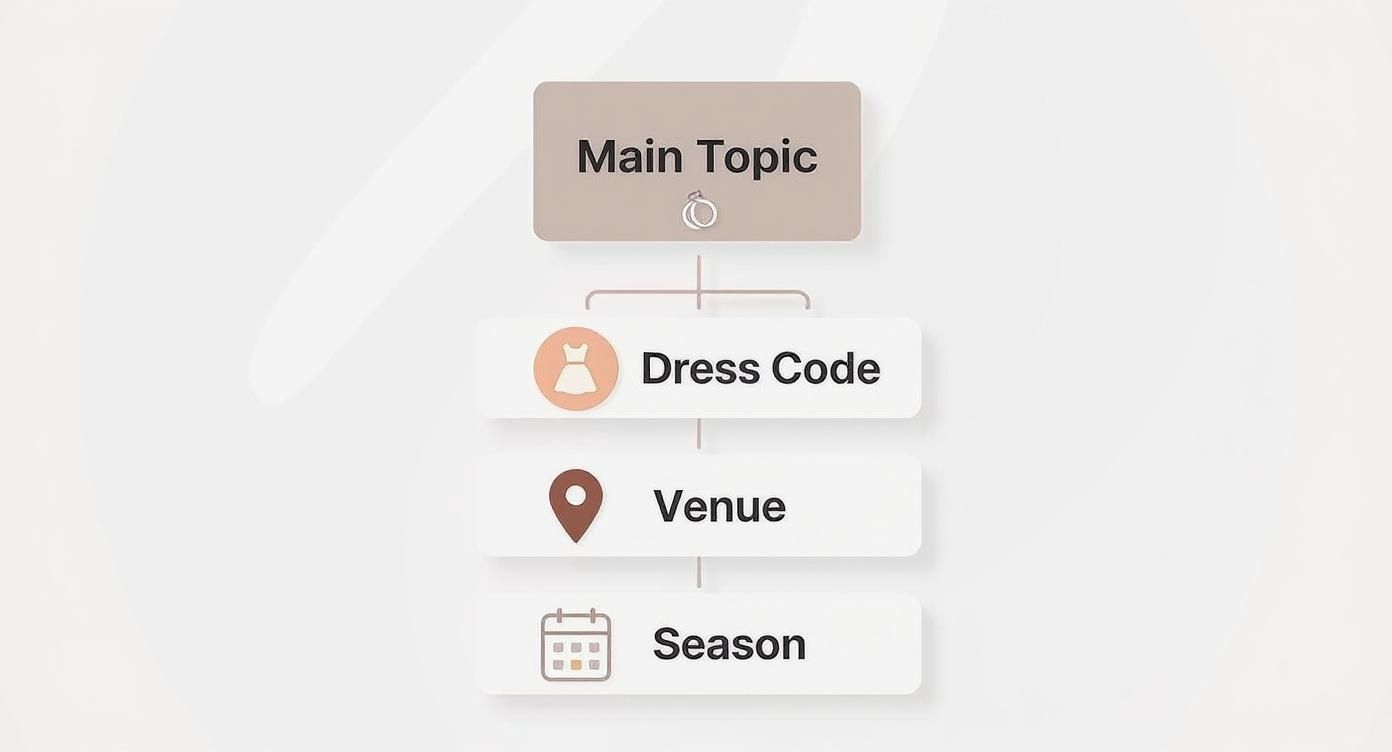
As you can see, the dress code is your starting point, setting the overall tone. From there, the venue and season help you fine-tune the details, ensuring your outfit is practical and perfectly suited for the day.
The 3 Core Elements of Your Outfit
Let's break down exactly what you should be looking for. Each of these three factors plays a crucial part in shaping your final look.
-
The Dress Code: This is the big one—your direct instructions from the couple. Whether the invitation says "Black-Tie Optional" or "Casual," this is your non-negotiable starting point for how formal your outfit should be.
-
The Venue: Where is the wedding happening? An elegant ballroom, a rustic barn, or a sandy beach all call for very different attire. The venue informs everything from the style of your dress to, most importantly, your choice of shoes.
-
The Season: The time of year is a major player. It influences your color choices, the weight of your fabrics, and whether you’ll need to bring a chic coat or wrap. A breezy summer garden party and a cozy winter ceremony are worlds apart in style.
Once you have your outfit sorted, the right accessories are what truly pull it all together. A classic handbag can make all the difference, and it's worth exploring why to invest in designer bags to see how a quality piece can elevate your entire look. A great bag isn't just about style; it's about adding that final, polished touch.
Cracking the Code: What Common Wedding Dress Codes Really Mean
Think of the dress code on the invitation as your personal roadmap to the wedding's vibe. It’s the single biggest clue the couple gives you about what they envision for their day, and it’s meant to help everyone feel comfortable and in the right spirit. Getting it right is a way of honoring their celebration.
So, let's break down what these terms actually mean in the real world. Nailing the dress code ensures you’ll feel confident, respectful, and perfectly in sync with the party's atmosphere.
Black Tie: The Peak of Formality
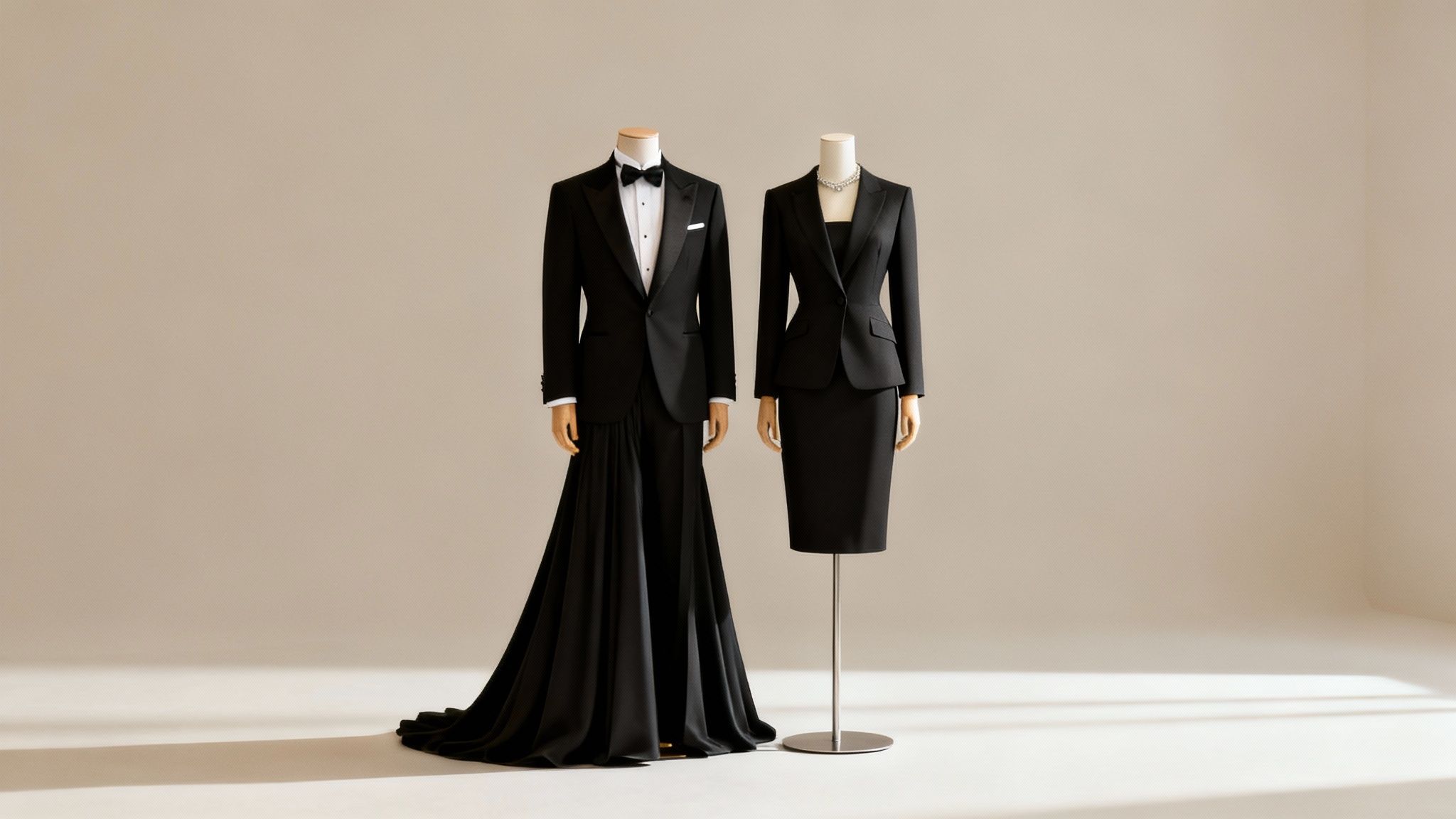
When an invitation says Black Tie, it’s time for your red-carpet moment. This is as formal as it gets for a wedding guest, calling for sophisticated, elegant evening wear. It’s a green light to go all-out with glamour.
For women, this almost always means a formal, floor-length gown. Think luxurious fabrics like satin, silk, or velvet that have a beautiful drape. For men, the rules are pretty strict: a tuxedo is expected, complete with a black bow tie, and patent leather shoes. This isn't a time for creative interpretation; it's a classic for a reason.
Key Takeaway: Black Tie is a directive, not a suggestion. It signals a highly formal, elegant evening, and dressing to the nines is the best way to celebrate the couple's vision for their big day.
It's clear guests take this seriously. The global market for wedding guest dresses is booming, and it's projected to hit a value of around $8 billion by 2025. This surge, with formal dresses leading the charge, shows just how much we all want to find that perfect, appropriate outfit. You can dive deeper into this trend with data from Archive Market Research.
Cocktail and Semi-Formal: Finding the Sweet Spot
Here’s where things get a little more flexible and, for many, a lot more fun. Cocktail Attire (often used interchangeably with Semi-Formal) hits that perfect note between formal and relaxed. It’s polished and celebratory, but you can leave the floor-length gown at home.
This is your go-to for an upscale party. Here are some great options that always work:
- For Women: A chic knee-length, tea-length, or midi dress is a classic choice. Don’t count out a stylish jumpsuit or elegant separates, like a dressy top paired with a beautiful skirt.
- For Men: A suit and tie are non-negotiable. A dark suit in navy, charcoal, or black is always a safe, sharp choice, but you have more room to play with color and pattern than with a black-tie event.
While cocktail and semi-formal are similar, the time of day can be a subtle tie-breaker. An evening wedding might call for slightly darker colors and more luxe fabrics. If you're looking to make a splash, you can find some incredible inspiration with these fuchsia cocktail dresses that make a statement.
Casual and Festive: The Laid-Back and Lively Codes
Sometimes, a couple wants a more relaxed or playful feel. A Casual dress code means the wedding will be pretty laid-back, but hold off on the denim. It’s not that casual. Think "smart casual" or "dressy casual"—a nice sundress, a great skirt and top combo, or tailored pants with a stylish blouse all fit the bill.
Festive Attire is your invitation to have fun with your outfit! You'll often see this for holiday-season weddings or themed celebrations. It's essentially cocktail attire but with a joyful twist. Embrace bright colors, bold patterns, and standout accessories. The goal is to look chic while leaning into the celebratory spirit of the day.
Matching Your Outfit to the Venue and Location
The dress code on the invitation sets the general tone, but the venue tells you the real story of the day. Think of the location as the stage for the wedding—your outfit should feel right at home in that setting. A grand ballroom and a rustic barn demand completely different approaches to style, comfort, and especially footwear.
Figuring out what to wear to a wedding means matching your attire not just to the formality level, but to the physical environment itself. This is how you stay chic while confidently navigating everything from a grassy lawn to a sandy shore.
Dressing for Outdoor Celebrations
Outdoor weddings are absolutely stunning, but they bring their own set of fashion puzzles. The trick is to find that perfect sweet spot between elegance and practicality.
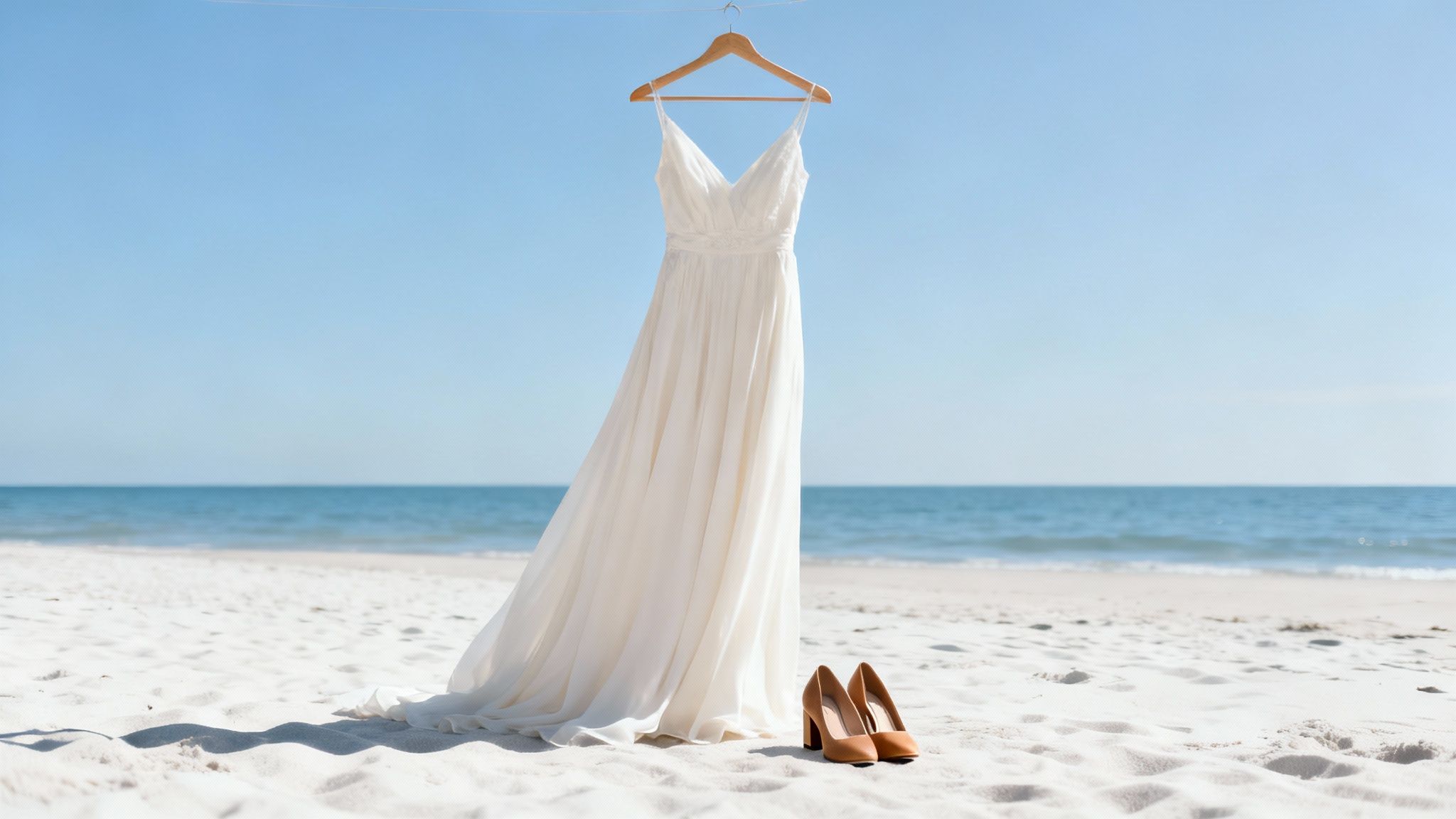
For a sun-drenched beach wedding, lightweight and breathable fabrics are your best friends. Think linen, chiffon, or airy cotton. A flowy maxi or midi dress in a vibrant, tropical print always looks fantastic. But footwear is the real game-changer here; stilettos will sink straight into the sand. Instead, reach for elegant flat sandals, espadrilles, or even some sturdy block heels.
A garden or countryside wedding, on the other hand, just begs for romantic and slightly more structured looks. This is the time for floral prints, soft pastels, and lovely fabrics like organza or satin. Wedges or block heels are a must, preventing you from aerating the lawn with every step you take.
Pro Tip: Always, always check the weather forecast for an outdoor event. A stylish pashmina, a tailored jacket, or an elegant wrap can be an absolute lifesaver if the temperature dips in the evening. You'll stay comfortable without sacrificing your look.
Attire for Indoor Venues
Indoor venues generally mean a more formal and controlled environment, which opens up more possibilities for delicate fabrics and adventurous footwear.
A wedding held in a grand hotel ballroom or a historic mansion is your cue to bring the glamour. This kind of setting is the perfect backdrop for luxurious materials like velvet and silk. Polished silhouettes, sophisticated cocktail dresses, and even ultra-chic formal jumpsuits all work beautifully. This is the perfect occasion for those stunning statement heels you've been waiting to wear. You can even explore some beautiful designer high heels to step up your style that would be ideal.
If the ceremony is at a chic city hall, a modern museum, or a trendy restaurant, think contemporary and sophisticated. A sharp, tailored suit, a sleek midi dress, or a stylish coordinated set strikes just the right balance between formal and fashionable.
Finally, for a rustic barn or winery wedding, lean into a "dressy casual" vibe. Your outfit should still feel elegant, but with a slightly more relaxed touch. Rich textures, deep jewel tones, and midi-length dresses paired with comfortable block heels or even dressy boots are fantastic choices that perfectly match the charming, laid-back atmosphere.
Dressing for the Season: A Year-Round Guide
Just as the venue sets the scene, the season paints the backdrop for the whole celebration. Think about it—from the fresh blooms of spring to the crisp air of autumn, the time of year is a massive clue for figuring out what to wear. Dressing for the weather isn't just about being comfortable; it's about choosing colors, fabrics, and styles that feel right for the natural atmosphere of the day.
Your outfit should feel like it belongs in that season's landscape. Get that right, and you'll not only look appropriate but also feel perfectly prepared, whether you're at an afternoon garden party or a cozy evening affair.
Spring and Summer: Breezy Styles
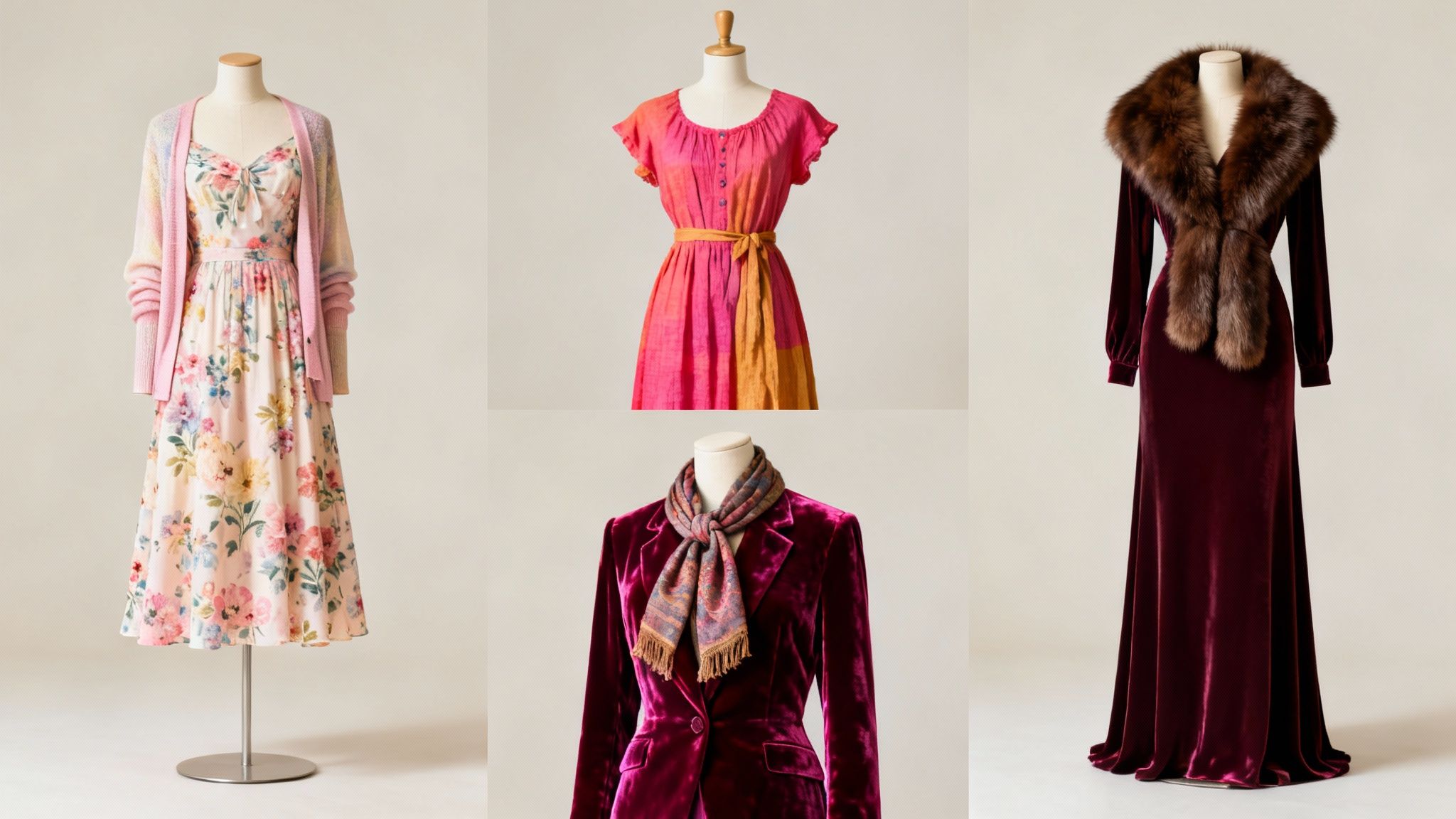
Spring weddings are all about new beginnings, making it the perfect time to embrace lighter, brighter palettes. Think soft pastels, romantic floral prints, and airy fabrics that move beautifully as you walk. It’s always smart to bring a lightweight layer, like a pashmina or a tailored blazer, for those evenings that can still have a bit of a chill.
When summer rolls around and the temperatures climb, the goal is to stay cool while looking chic. Now's the time for vibrant, celebratory colors and fabrics that let your skin breathe.
- Fabric Focus: Chiffon, organza, and linen are your best friends here. They look fantastic without weighing you down.
- Style Suggestions: You can't go wrong with a flowy maxi dress or an elegant midi skirt—both are stylish and incredibly practical for warm-weather events.
Autumn and Winter: Rich Textures
Once autumn arrives, the color palette naturally deepens. This is your chance to play with rich jewel tones like emerald, sapphire, and burgundy. Luxe textures also take center stage, adding a layer of warmth and sophistication to your look.
Winter weddings, in particular, call for a beautiful blend of elegance and warmth. Fabrics like velvet and satin are not only stunning but also practical for colder temperatures. They catch the light beautifully in cozy, candlelit settings.
For a winter wedding, don't shy away from outfits with a bit more coverage. A long-sleeved gown or a midi dress paired with sheer tights offers both style and comfort. The perfect finishing touch? A chic faux-fur wrap or a classic wool coat will keep you cozy from the ceremony to the reception. This kind of thoughtful layering shows you've really considered every detail of what to wear to a wedding, no matter what the calendar says.
Navigating Cultural Wedding Attire with Respect
Weddings are a beautiful reflection of a couple’s culture and family traditions. As a guest, what you wear can be a powerful and meaningful way to show your respect and join in the celebration.
When you're invited to a wedding with deep cultural roots, think of the dress code as an invitation to participate, not just a set of rules. The best first step is always to do a little research. If you’re close with the couple or a member of the wedding party, don't hesitate to ask for pointers. They'll almost always be happy to help.
Rule of Thumb: When in doubt, always lean toward being more modest and formal. Unless the couple specifically encourages casual wear, it's wise to avoid anything too revealing or laid-back for a traditional ceremony.
Understanding Common Cultural Attire
Many cultures have specific, beautiful garments reserved for celebrations. For instance, at an Indian wedding, you'll see women in stunning, vibrant sarees and lehengas. While you aren't typically expected to wear one unless invited to, you can certainly take inspiration from the rich colors and intricate textiles when selecting your own outfit.
This idea of clothing as a symbol of identity and respect is universal. At a traditional Mandarin wedding, you might see female guests in an elegant qipao, a silk dress known for its distinctive collar and embroidery. At a Malay wedding in Malaysia, the baju kurung is a gorgeous and common choice for guests. You can see more examples of how guests dress for traditional weddings around the world on Business Insider.
Here are a few general principles to keep in mind:
-
Color Symbolism: Colors can carry heavy cultural weight. For example, in some Eastern cultures, white is the color of mourning, while red is a powerful symbol of luck, joy, and prosperity. It's a good idea to know which colors to embrace and which to avoid.
-
Modesty is Key: Many traditional or religious ceremonies take place in houses of worship and call for more conservative dress. This might mean ensuring your shoulders and knees are covered, or sometimes even your head. Following these customs is a simple and profound sign of respect.
-
Observe and Learn: The invitation or the couple's wedding website is your best friend. These often have a section dedicated to the dress code or helpful tips for guests unfamiliar with the customs.
Ultimately, your presence at the wedding is what matters most. By taking the time to understand and honor the cultural context of the day, you're giving the happy couple a wonderful gift of respect and support.
Common Fashion Mistakes Every Wedding Guest Should Avoid
Figuring out what to wear is half the battle, but knowing what not to wear is just as crucial. Think of it as the unwritten rulebook for wedding guests—a few simple guidelines that keep the spotlight exactly where it belongs: on the happy couple. Your goal is to show up looking fantastic in a way that celebrates them, not distracts from their big day.
Let’s start with the big one, the cardinal sin of wedding guest attire: never wear white. And yes, that includes all its cousins—ivory, cream, off-white, and even the palest champagne. This color family is reserved exclusively for the bride. It’s her day to shine, so let her have that moment completely.
Steering Clear of Common Pitfalls
Beyond the "no white" rule, there are a few other common missteps that are easy to avoid with a bit of foresight. It's all about looking put-together and respectful, showing the couple you understand the significance of the event.
Here are a few things that are better left in the closet:
- Overly Casual Clothing: Jeans, t-shirts, shorts, and sneakers are almost always a no-go unless the invitation specifically says something like "beach bonfire."
- Anything Too Revealing: A wedding is a celebration, but it’s not a nightclub. Super short hemlines, plunging necklines, or dresses with tons of cutouts can come across as disrespectful. It's best to lean into elegance.
- Loud, Attention-Grabbing Patterns: Festive prints can be fun, but anything that looks like a costume or is so flashy it pulls focus from across the room is probably too much. Understated elegance is your friend here.
A great gut check is to ask yourself one simple question: "Does this outfit feel respectful of the couple and their event?" Your clothing is a non-verbal way of showing your support, and a thoughtful choice says everything.
So, instead of that gorgeous white sundress, maybe reach for a beautiful pastel or a rich jewel tone. Tempted to wear something super casual for comfort? Try a chic, wide-leg jumpsuit or a pair of tailored trousers with a silky blouse instead. Simple swaps like these make sure you look incredible for all the right reasons.
Your Wedding Attire Questions Answered
Even with the best planning, a few nagging questions can throw you for a loop when you're staring into your closet. Let's tackle some of the most common dilemmas that guests run into, so you can feel completely confident in your final choice.
Can I Wear Black to a Wedding?
Yes, you absolutely can! The old, stuffy rule about black being a no-go for weddings is officially a thing of the past. Nowadays, black is seen as incredibly chic, sophisticated, and perfectly appropriate, especially for an evening or formal affair.
The key is to keep the vibe celebratory, not somber. Think about the details. A black dress in a beautiful fabric like silk, satin, or velvet instantly feels special. You can also liven it up with a pop of color through your accessories—a vibrant clutch, some statement earrings, or a bold red lip will do the trick.
What if the Invitation Doesn't Specify a Dress Code?
When the invitation leaves you guessing, it's time to put on your detective hat. Your best clues are always the venue and the time of day. An evening wedding at a swanky hotel is going to have a very different feel than a 2 p.m. ceremony at a rustic barn.
Our Golden Rule: When in doubt, it’s always better to be a little overdressed than underdressed. A classic cocktail dress or a sharp suit and tie is almost always a safe, elegant bet that works for a wide range of formalities.
Is It Okay to Re-Wear an Outfit to Another Wedding?
Please do! In an age where we're all trying to be more mindful, re-wearing a great outfit is both smart and sustainable. The global wedding wear market is expected to hit nearly $110 billion by 2030, which shows just how much we're buying. Re-wearing a piece you love is a fantastic way to get more out of your investment and cut down on waste. You can explore detailed market statistics here if you're curious.
Worried about the same crowd seeing you in the same thing? Just give it a fresh spin. A different hairstyle, new accessories, or a change of shoes can completely transform the look. It's all in the styling.
Here at Mara Formigone, we believe that finding the perfect wedding guest outfit should be part of the fun. Explore our curated Wedding Guest Collection to discover timeless dresses, elegant shoes, and stunning accessories from the world's most iconic designers. Find your next unforgettable look at https://maraformigone.com.
Article created using Outrank